The article distinguishes cashier availability and payment routes from the legality of real-money online casino services in Australia.
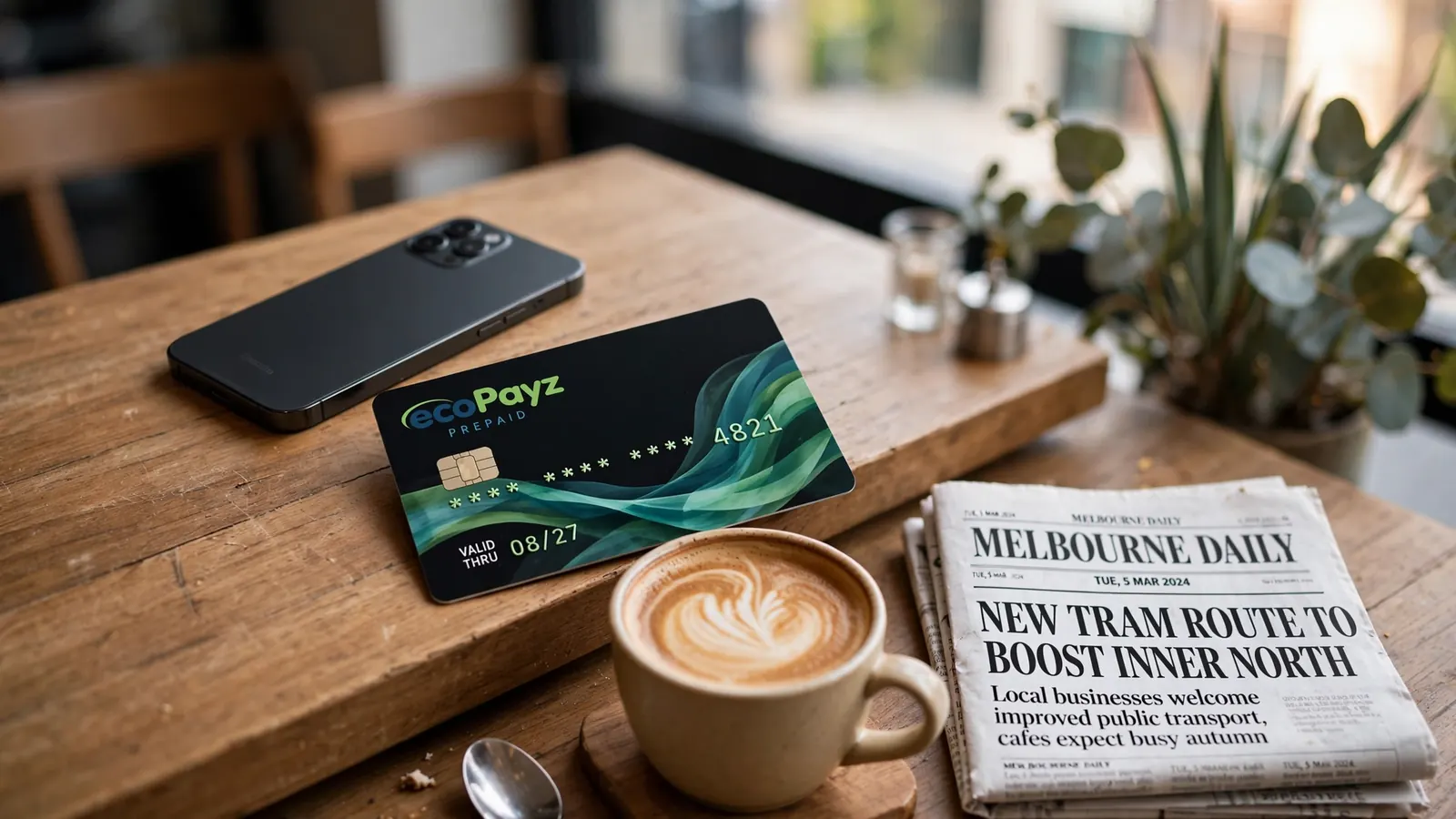
A payment method can cross a border more easily than a legal permission. In Australia, that distinction matters when a search for an online casino that accepts EcoPayz appears to be a practical question about paying. The method of payment does not change the rule governing the service itself: the Interactive Gambling Act 2001 prohibits operators from providing real-money online casino games to people in Australia.
The prohibition covers casino-style gambling services offered online, rather than one particular cashier, wallet or game. Its focus is the operator supplying the service to a person physically located in Australia. A foreign location, offshore licence or payment brand does not, by itself, create an exception to that Australian boundary. A transaction may be technically possible without the underlying service being lawful to offer here.
That difference is easily blurred by the language of digital commerce. A cashier presents a tidy sequence: choose a method, enter details, submit a payment. It can make the transaction look like an ordinary retail purchase, with the legal character of the service receding behind the interface. But payment is only one part of the arrangement. The law addresses the provision of prohibited interactive gambling services to people in Australia, not merely the route by which money moves.
Choosing a casino that accepts ecoPayz in Australia calls for checking the details that are actually available, such as licensing, minimum deposits and payout information. Use these brief verdicts as a starting point when assessing the options.
SkyCrown
SkyCrown lists a Tobique Gaming Commission licence and a minimum deposit of A$30. Its stated payout times are around 10–15 minutes for crypto and 1–5 days for fiat.
JustCasino
JustCasino lists a licence from the Curacao Gaming Control Board. No deposit or payout details are provided here.
MrPacho
MrPacho has a stated minimum deposit of A$30. Its listed payout times are 30–120 minutes for crypto and 24–72 hours for fiat.
LevelUp Casino
LevelUp Casino lists Curacao eGaming licence OGL/2023/174/0082, associated with Dama N.V. Its minimum deposit is A$15.
Lucky Dreams
Lucky Dreams lists a Curacao licence and a A$20 minimum deposit for POLi. No payout details are provided here.
House of Pokies
House of Pokies lists an international iGaming licence, though the jurisdiction is not named in the source. PayID payouts are listed at 1–24 hours, with a minimum deposit of A$30 or A$10 for PayID.
Uptown Pokies
Uptown Pokies lists a Curacao licence and has been operating since 2017. Its minimum deposit is A$20.
WinSpirit Casino
WinSpirit Casino lists Curacao eGaming licence OGL/2024/923/0383, associated with Antillephone N.V. Its minimum deposit is A$30.
Roby Casino
Roby Casino lists a Curacao eGaming licence held by Roby Games Ltd. No deposit or payout details are provided here.
Vegaz Casino
Vegaz Casino lists Curacao licence OGL/2024/1335/0780. Its minimum deposit is EUR 20.
The Interactive Gambling Act makes it illegal for operators to offer real-money online casino games to Australian residents. The category includes online casino-style games such as poker and table games, as well as other forms of casino gambling. This is not a system in which an offshore casino becomes locally authorised simply by accepting Australian customers or using a payment service familiar to them.
The Australian Communications and Media Authority is responsible for enforcing the Act. Enforcement includes action against prohibited services, and offshore sites may be actively blocked. That practical reality sits alongside the legal rule: access to a website can be disrupted even where a service has been designed to operate across national borders. The internet’s geography is less frictionless than its interfaces suggest.
The Act also sets substantial daily maximum penalties for violations: $360,000 for individuals and $1.8 million for bodies corporate. Those figures concern violations of the law; they should not be confused with a penalty imposed on a player merely for using an offshore casino. The distinction between the operator’s legal exposure and the player’s position is central, not a technical footnote.
The law does not explicitly criminalise an individual player for using an offshore online casino. That is not the same as saying the service is legal to provide in Australia, nor does it amount to a government endorsement of offshore gambling. The prohibition falls on the supply side, while the player is not made criminally liable simply for using a site based abroad.
There is a second distinction, between the absence of that player offence and the availability of consumer protection. Australian consumer law does not protect players who use offshore casinos. If a dispute arises over an account, a payment or winnings, the fact that a player is not criminally liable does not bring the offshore operator within the protections available for domestic consumer services. No local remedy follows automatically from the ability to open a webpage or initiate a transaction.
This leaves an awkward asymmetry. The operator is prohibited from supplying the service to Australians; the individual player is not explicitly criminalised for using an offshore one; and the player may lack Australian consumer-law protection in dealing with that operator. These are separate legal positions, not contradictory statements. Legal permission, practical access and consumer recourse are different things.
A question about Australian online casinos accepting EcoPayz therefore has a boundary that comes before payment compatibility. Whether an offshore cashier displays a particular wallet cannot alter the Act’s treatment of the operator’s service. Nor does a payment option establish that the site is an authorised Australian casino. The method answers how a transaction might be attempted, not whether the service may lawfully be offered to someone in Australia.
This is why payment language can mislead without being false. “Accepts” sounds like a simple feature, and a cashier may indeed show a range of options. Yet the more consequential issue is the legal status of the gambling service behind that screen. In Australia, real-money online casino services remain prohibited for operators offering them to people here, while enforcement can make offshore access uncertain. A familiar payment label is no legal passport.
Australia’s everyday payment landscape is not arranged around a single preferred instrument. Contactless credit and debit cards are accepted almost everywhere, making the small tap at a counter part of ordinary commerce. Mobile wallets, including Google Pay and Apple Pay, have a similarly broad presence. The physical card has not vanished; it has acquired a digital companion.
That overlap matters. A mobile wallet is not a rejection of cards so much as another way to reach a payment system already familiar to consumers. The same person may tap a card one day, use a phone the next, and rely on a service connected to a bank at another point. Australians are comfortable moving among these options rather than treating one as a permanent choice.
PayPal belongs to that bank-linked layer. It sits between a consumer and a transaction, offering a route that does not require entering card details each time. Its familiarity helps explain why payment preferences cannot be read simply from the number of cards in circulation or from the visibility of phone payments. People adopt tools according to the task and setting; convenience is often a matter of fit, not allegiance.
This flexible habit shapes how payment questions are framed. Someone asking about EcoPayz alongside casino payments may be looking for a wallet-based route in a country where cards, phone wallets and bank-connected services are already ordinary parts of daily life. That context describes the broader payment culture, not whether any particular gambling service accepts a particular method. Everyday acceptance and a service’s own arrangements are separate matters.
There is a quiet social change in the tap itself. Payment has become less visible: a card, a phone or an account-linked service can perform a familiar act with little ceremony. Yet the underlying choices remain plural. Australia’s broad acceptance of contactless cards and mobile wallets has not produced a single national habit; it has made switching between methods unremarkable.
That is the useful backdrop for any discussion of digital payments. A country accustomed to moving between card, wallet and bank-linked service is not necessarily committed to every wallet it encounters. Familiarity with switching is not proof of acceptance everywhere. The distinction is plain, if less convenient than a universal answer.
The question of whether an Australian-facing casino accepts EcoPayz cannot be answered by substituting information about another payment method. The payment evidence discussed in specialist reviews concerns American Express (Amex), not EcoPayz. It offers no reliable basis for naming casino sites that take EcoPayz, or for calling any of them the best.
That distinction matters because payment logos and cashier menus can look like a tidy catalogue of options, while acceptance is a decision made by individual operators and payment providers. A method being familiar in Australia does not establish that an online gambling service accepts it. Nor does a report about Amex tell anything conclusive about an EcoPayz account, card or transfer.
A specialist review has reported that some Australian online casinos accept Amex deposits. That is a limited, time-sensitive statement, not a settled description of the market. Payment arrangements can change, and a review may describe a particular operator at the time it was checked. It should not be read as confirmation that every Australian-facing service supports Amex, or that a deposit method will also be available for withdrawals.
The same caution applies to comparisons. A specialist review has suggested that Visa may be accepted more broadly than Amex at Australian online casinos. The claim is comparative, not a complete count of operators, and it does not establish a fixed hierarchy that will hold across services or over time. More importantly here, neither side of that comparison supplies evidence about EcoPayz.
This leaves a narrower answer than the wording of the question might invite. There is reporting about Amex acceptance, but it does not identify EcoPayz-compatible sites. Naming operators or presenting a ranked selection on that basis would turn one payment method’s reported availability into a claim about another. It would be a category error dressed as a shortlist.
A payment label also has several possible meanings. It may indicate that deposits are accepted, without saying whether withdrawals can return through the same route. It may refer to a card branded by a payment company rather than an account or wallet, or to a service available only under particular account conditions. Those distinctions cannot be inferred from a general statement that a site accepts a method.
The practical value of any acceptance claim therefore depends on its scope: which payment product it describes, whether the statement concerns deposits or withdrawals, and when it was checked. A broad label is not a guarantee of a functioning route. For EcoPayz, no site-specific conclusion follows from the Amex information.
There is also a larger Australian context to keep in view. The law prohibits operators from providing real-money online casino games to people in Australia, and consumer law does not protect players who use offshore casinos. Payment compatibility is not a substitute for that protection, nor does it make an offshore service lawful. A cashier can confirm what an operator says it accepts; it cannot settle the legal or consumer-protection question.
The answer, then, is not a list of EcoPayz casinos. The available payment reporting concerns Amex, with limited claims about deposit acceptance and Visa’s comparative reach. It does not establish which sites accept EcoPayz in Australia. A different method, a different claim.
A payment method cannot make an offshore casino lawful to operate in Australia. Under the Interactive Gambling Act 2001, providing real-money online casino games to people in Australia is prohibited. The rule concerns the service offered by the operator; it does not make a player’s use of an offshore site a criminal offence.
Enforcement sits with the Australian Communications and Media Authority (ACMA), which administers the Act’s application to online services. Offshore casino sites may be blocked, so a page describing an Australian casino that accepts EcoPayz can imply a settled, accessible local service where neither point is assured. A cashier’s payment options, even if displayed, do not settle the legal status of the operator or guarantee that a transaction will work.
That distinction matters because payment branding can make an international service look ordinary. A wallet may be familiar in Australia, while the casino receiving it remains outside the country’s lawful online casino market. The presence of an EcoPayz option would establish only what a particular site says about its payment arrangements at that moment. It would not establish Australian authorisation, reliable access, or a route to resolve a dispute.
Consumer protection has a boundary too. Australian consumer law does not protect players who use offshore casinos. If a payment is delayed, an account is inaccessible, or a dispute arises, the protections available for ordinary domestic purchases should not be assumed to apply. Familiar payment rails are not a substitute for local recourse.
This is why claims about an “Australian EcoPayz casino” need careful reading. “Australian” may describe the intended audience or a site’s marketing, rather than a lawful Australian operator. Nor does a payment logo prove that a deposit or withdrawal is available to a person in Australia. Access may be restricted, and the legal framework is directed at the service provider, not at validating a particular cashier.
The distinction is less tidy than a payment menu suggests. A familiar wallet, an Australian-facing page and a lawful local casino are not the same thing. Policy is clearer than the interface.
A payment description can sound more definitive than it is. A cashier may show a card method, request details and display a deposit amount in Australian dollars; that describes a transaction path, not a general promise that the path is available at every operator or for every customer. In particular, details about Amex do not establish how an EcoPayz deposit works, or whether an offshore casino accepts EcoPayz.
That distinction matters in Australia, where real-money online casino services are prohibited for operators serving people in the country. A description of a payment process should not be mistaken for an invitation to use one. Australian consumer law does not protect players who use offshore casinos.
Where an Amex payment is offered, the described sequence is straightforward: Amex is selected in the cashier, card details and a deposit amount in AUD are entered, and the transaction is submitted. The process concerns paying in. The cashier is the operator’s payment interface; its options and conditions are specific to that operator and may change. A method appearing there is not evidence of a standard arrangement across the market.
Amex Deposit Process
Selection
Select American Express as the payment method within the casino cashier.
Data Entry
Enter the required card details and the deposit amount in Australian dollars (AUD).
Submission
Submit the transaction for processing.
The distinction between a visible option and an available transaction is important. A payment can be shown as a method without establishing that every card, account or transaction will be accepted. A specialist gambling review has reported that an Amex payment may be declined when Amex blocks transactions to a particular website. That is a possibility described in that kind of review, not a universal rule about current card acceptance. The status of a payment route can depend on the parties involved, and the mere presence of a logo or menu entry cannot settle what happens when payment is submitted.
The same restraint applies to the word “instant”. Amex deposits are described as processing instantly, but that concerns the processing of the deposit itself. It does not establish that a transaction will be approved, that an account is eligible to use the method, or that every cashier will offer it. Processing speed and acceptance are separate questions. One describes what may happen after a payment is accepted; the other determines whether the payment can be made at all.
Nor does a completed deposit answer every question about the account or the operator. A payment interface is not a statement of the legal status of the service. It is not proof that Australian consumer protections apply, and it does not turn an offshore casino into a locally authorised service. Technology often makes access look ordinary: a card field, a currency label, a button. The legal position is not made ordinary by the design.
For the same reason, a reference to a casino deposit via EcoPayz cannot be substantiated by the mechanics of an Amex deposit. These are different payment methods. Selecting a card in a cashier and submitting card details says nothing about whether a wallet service is listed, whether it can be used for deposits, or whether a transaction through it would be accepted. The method-specific details should remain method-specific.
Searches for a small fixed deposit amount do not change that distinction. The Amex process includes an amount entered in AUD, but no particular minimum follows from that fact. Deposit thresholds, if any, are set in the relevant payment and account conditions, not inferred from the currency field. A figure that appears plausible is still not a verified amount. Small numbers have a habit of looking harmless; they remain financial terms.
The phrase “best casino” also asks for more than a payment description can establish. A cashier option alone cannot demonstrate overall suitability, legality for Australian residents, reliability or consumer protection. Nor can it establish that a particular operator accepts EcoPayz. Turning a method reference into an endorsement would make the payment detail carry a weight it cannot bear.
The practical meaning of the Amex sequence is therefore narrow: where that method is offered and the transaction is accepted, the payment flow described involves selecting Amex, supplying card information, entering an AUD amount and submitting it. A specialist review has also described instant processing, while noting the possibility of a decline if Amex blocks a particular website. Those are limited observations, not guarantees of availability or approval.
Payment pages create an impression of certainty because they reduce a complicated transaction to a few fields. Yet the fields do not explain the whole relationship behind them. A method can be presented, a payment can be attempted, and the transaction can still be declined. None of that supplies a basis for assuming that EcoPayz is accepted wherever Amex is shown—or that either method makes an offshore casino lawful or protected for Australian players. The interface is not the institution.
A withdrawal has two separate questions attached to it: whether a payment route is eligible to receive the money, and how long the transfer takes once it is accepted. Those questions are easy to collapse into a promise of an “instant” payout. They are not the same. For Amex, a previous deposit with that card is a stated prerequisite for withdrawing through it; even then, the route is not available at every casino.
A specialist review of casino payment arrangements reports that some Australian-facing sites do not permit withdrawals to Amex. That qualification matters more than the card logo in a cashier. A method shown for deposits does not, by itself, establish that winnings can be returned through the same channel. The withdrawal rules need to be considered separately, and they may differ between operators.
There is a practical logic to the prior-deposit condition. A payment method used to fund an account may be considered as a possible return route, but that does not make it an automatic destination for every later payment. In Amex’s case, the stated condition is specific: a player must first have deposited with Amex before requesting a casino withdrawal to it. Without that earlier transaction, the route does not meet the described eligibility requirement.
Eligibility is not speed. A specialist review gives a possible clearance period of up to five days for casino withdrawals made through Amex. That is a reported maximum, not a promise that every transfer will take that long, nor evidence that any particular withdrawal will arrive instantly. “Clear” also matters as a word: a withdrawal’s passage through a casino’s own process and the point at which money becomes available are not necessarily one event. The reported period concerns clearance, not a universal timetable for every step.
The distinction is more than administrative. A cashier can make a payment method look like a simple two-way door, while the terms governing money out may be narrower than those governing money in. The earlier deposit establishes one condition, but it does not settle whether the casino permits Amex withdrawals, what clearance period applies in a particular case, or whether the route is suitable for the account in question. Each is a separate part of the arrangement.
The phrase “instant withdrawal” is especially slippery. It can refer to the moment a request is submitted, an internal approval, or the eventual availability of funds. Those are different stages, and a claim about one does not establish the others. In the Amex information described by a specialist review, the stated timing is that withdrawals may take as long as five days to clear. It therefore would be misleading to turn an instant-deposit description into an instant-withdrawal claim. Money going in and money coming out do not share a clock merely because the same card is named.
This is also why a payment label should not be read as a complete account of withdrawal terms. The card may appear in a cashier’s deposit menu while being absent from the available withdrawal routes. Or it may be usable for withdrawals only where the earlier-deposit condition has been met. The important question is not simply whether Amex appears somewhere on the site, but whether the specific withdrawal route is allowed and what timing is attached to it.
The same caution applies to broad claims about Australian casino services. A specialist review reports that Amex withdrawals are not offered by every Australian-facing casino. That is a limited statement, not a reason to assume either that the route is generally available or that it is universally refused. Payment arrangements can vary between operators and can change. A statement about one service cannot be made to carry the weight of a market-wide rule.
EcoPayz is a separate payment method, and the Amex conditions do not establish anything about EcoPayz withdrawal eligibility or speed. A card’s prior-deposit requirement cannot be transferred to a wallet, and an Amex clearance estimate cannot be used as a wallet timetable. The word “instant” is no substitute for method-specific terms. A name in a search phrase, a deposit menu or a general payment description does not prove the conditions for withdrawing through it.
There is a further boundary behind all such arrangements in Australia. The Interactive Gambling Act 2001 prohibits operators from providing real-money online casino games to people in the country. A player using an offshore casino does not face criminal liability under the stated legal position, but Australian consumer law does not protect people who use offshore casinos. That lack of protection is particularly relevant when a payment dispute concerns eligibility, delay or an operator’s interpretation of its own terms. A payment route is not a safeguard.
The careful reading, then, is a modest one: Amex withdrawal eligibility depends on a previous Amex deposit, availability is not universal according to a specialist review, and the reported clearance period can extend to five days. None of those points turns a withdrawal into an instant transaction. Nor can they be used to infer how another payment service works. A route is not a timetable.
Payment methods can be compared by reach, speed and fees, but those qualities do not add up to a universal winner. A payment option that appears widely accepted may not suit every transaction; a fast route may carry other conditions. Nor does a general comparison establish which individual sites accept EcoPayz. That depends on the payment options actually displayed by an operator, not on the reputation of a method elsewhere.
A specialist payment review reports that Visa may be accepted at more Australian online casinos than Amex. The distinction is about potential reach, not a guarantee that either card will work for a particular service. Acceptance can depend on the operator and the financial institutions involved. A broad statement about Visa therefore cannot serve as a site-by-site confirmation, and it says nothing about EcoPayz availability.
Bank transfers and cryptocurrency present a different contrast. A specialist payment review says bank transfers may take longer and involve higher fees. This can make them less straightforward where timing or cost matters, though the exact terms depend on the service handling the transaction. The comparison is useful as a general caution, not as a promise about every transfer.
Cryptocurrencies such as Bitcoin and Ethereum are described as allowing deposits and withdrawals to happen instantly, with limited or no fees. That is a stated feature of those payment routes, not a reason to treat them as interchangeable with cards or wallets. The process, any applicable conditions and the risks of using a cryptocurrency remain distinct from the convenience suggested by speed alone. Fast is not the same as simple.
For someone considering an EcoPayz-enabled casino, these comparisons leave the central question unanswered: whether a particular cashier offers EcoPayz for the relevant transaction. Visa’s reported reach does not prove EcoPayz acceptance; nor do the timing and fee characteristics of bank transfers or cryptocurrency. A payment-method comparison cannot honestly be turned into a list of the best EcoPayz sites, bonuses or games without site-specific confirmation.
The same restraint applies to rankings. “Best” has no stable meaning when acceptance, fees and processing conditions can vary between operators and transaction types. A list assembled from general payment traits would rank assumptions, not verified options. The sensible distinction is narrower: the available comparisons describe broad differences between methods, while compatibility must be established at the individual cashier. That is less glamorous than a league table, but more useful.
A payment option belongs to the operator’s cashier, not to an individual game. A listing that says EcoPayz is accepted therefore cannot, by itself, establish that a particular online slot supports EcoPayz. The transaction is handled at account level; the game is a separate service within the operator’s site. “EcoPayz slots” can sound like a distinct category, but the label blurs those two layers.
Nor does a payment logo settle what happens after an account is opened. Online casinos typically require customers to complete a Know Your Customer assessment before financial transactions. That customer check is separate from payment compatibility: passing one does not establish the other. A cashier can show a method while account verification or operator rules still affect whether a transaction proceeds.
There is also a more basic boundary in Australia. Under the Interactive Gambling Act 2001, operators may not provide real-money online casino games, including slots, to people physically in Australia. The law places the prohibition on providers; it does not explicitly criminalise a player for using an offshore site. That distinction is legal, not a promise of safety. Australian consumer law does not protect people who use offshore casinos, and access may be blocked.
Payment information has a narrow reach. It can describe a stated cashier method, but it cannot establish the legality of an operator’s service in Australia, customer eligibility, or the terms attached to a specific game. Those are different questions, governed by different checks. A small distinction, with large consequences.
Jackpot City Casino, Spin Palace, Ruby Fortune, Ignition Casino, Joe Fortune and PlayAmo are listed as accepting Amex deposits for Australian players. Acceptance can vary, and an Amex payment may be blocked by the card issuer.
Some casinos allow Amex withdrawals, but not all do, and you generally need to have deposited with Amex first. Withdrawals can take up to five days and may incur a fee.
Some casinos accept Amex withdrawals, but not all; you generally need to have deposited with Amex first. Withdrawals can take up to five days and may incur a fee. Australian law prohibits operators from offering real-money online casino games to people in Australia.
Amex casino deposits are processed instantly. Withdrawals can take up to five days to clear.
Amex deposits typically have no fee, but a casino may add a 1.5% surcharge, and Amex currency conversion can cost 3%. Check the cashier and your card terms before paying.
Deposits typically have no fee, though a casino may apply a 1.5% surcharge and Amex currency conversion can cost 3%. Withdrawal fees may also apply.