Apple Pay’s widespread use at Australian shops does not establish that a particular online casino accepts it or supports withdrawals.

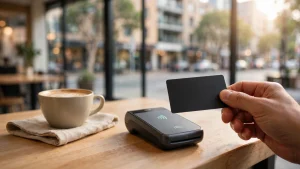
At an Australian shop counter, paying by phone has become an ordinary part of the transaction. Contactless cards are accepted almost everywhere in the country, and mobile wallets such as Apple Pay and Google Pay are similarly widespread. The movement from a card in a pocket to a card stored on a device has changed the gesture more than the underlying habit: tap, wait for approval, carry on. Convenience here is not a novelty. It is part of the daily architecture of paying.
That familiarity can make claims about online payments sound more settled than they are. A wallet that works across much of everyday commerce is not thereby available in every online setting. Acceptance belongs to the business taking payment, not to the wallet’s general popularity. A phone can be a routine way to pay for ordinary purchases while a particular online cashier offers a different set of options—or none of that wallet at all. The distinction is less dramatic than a failed tap, but more important.
Apple Pay availability can vary by casino and may need to be confirmed in the cashier before you deposit. Use these verdicts as a quick reference to the details provided for each operator, not as confirmation that Apple Pay is accepted.
SkyCrown
SkyCrown lists a A$30 minimum deposit and gives separate payout estimates for crypto (around 10–15 minutes) and fiat (1–5 days). Its stated licence is from the Tobique Gaming Commission.
JustCasino
JustCasino is listed with a Curacao Gaming Control Board licence. No deposit minimum or payout timing is provided.
MrPacho
MrPacho lists a A$30 minimum deposit, with crypto payouts estimated at 30–120 minutes and fiat payouts at 24–72 hours.
LevelUp Casino
LevelUp Casino lists a A$15 minimum deposit and a Curacao eGaming licence, OGL/2023/174/0082, associated with Dama N.V.
Lucky Dreams
Lucky Dreams lists a A$20 minimum deposit for POLi and a Curacao licence.
House of Pokies
House of Pokies lists a PayID payout estimate of 1–24 hours and a A$30 minimum deposit, with PayID deposits from A$10. Its source describes the licence as international but does not name the jurisdiction.
Uptown Pokies
Uptown Pokies is listed as operating since 2017, with a Curacao licence and a A$20 minimum deposit.
WinSpirit Casino
WinSpirit Casino lists a A$30 minimum deposit and a Curacao eGaming licence, OGL/2024/923/0383, associated with Antillephone N.V.
Roby Casino
Roby Casino is listed with a Curacao eGaming licence held by Roby Games Ltd. No deposit minimum or payout timing is provided.
Vegaz Casino
Vegaz Casino lists a EUR 20 minimum deposit and a Curacao licence, OGL/2024/1335/0780.
Australian consumers are accustomed to moving between payment types. Cards, mobile wallets and services connected to banks, including PayPal, sit within a flexible routine rather than forming separate financial worlds. The choice may depend on the device at hand, the retailer’s setup or simply the transaction’s familiar rhythm. That flexibility helps explain why Apple Pay can feel like an obvious candidate wherever an online payment is involved. It does not establish that any particular gambling service accepts it.
The phrase “Apple Pay accepted” can also conceal several separate questions. A service might display a payment logo in one context but not another; availability may depend on the specific cashier, account or transaction. General acceptance of a wallet by Australian merchants settles none of those details for a particular online business. The till and the online cashier may share a payment brand, but they are not the same point of sale. Familiarity travels; acceptance does not necessarily follow.
There is a social history in that small gap. Payment systems become normal not only because they are technically capable, but because shops, banks and customers build repeated habits around them. Once tapping a phone is routine, it is easy to treat the method as universally portable. Yet each merchant still decides which routes to payment it supports, and those decisions can differ across industries. A national habit is not an operator-level promise.
This is why broad descriptions of Australian payment culture should be read at their proper scale. They describe what people encounter across everyday commerce, not the contents of every online cashier. Apple Pay’s presence in ordinary transactions says something meaningful about consumer familiarity. It says nothing conclusive about whether a named casino service accepts the wallet. The first is a general pattern; the second would require evidence specific to that service and its current payment arrangements.
The same distinction applies when Apple Pay appears alongside the language of an Australian online casino. The wording may reflect an expectation shaped by familiar retail use, rather than a confirmed payment route. A wallet’s visibility in daily life can lend a claim an air of plausibility, but plausibility is not confirmation. Online payment options are determined at the point where a business actually processes a transaction, not by how often the same logo appears elsewhere.
Nor does the convenience of using a phone make the cashier’s choices interchangeable. Cards, wallets and bank-linked services may all be familiar to Australian consumers, yet each remains a distinct method with its own acceptance conditions. One does not stand in for another simply because all can be used without handling cash. The interface may make payment look like a single smooth gesture. Behind it, the available routes still depend on the merchant.
The careful conclusion is modest: Apple Pay is part of everyday Australian payment life, and people are comfortable switching among several ways to pay. That context explains why its appearance in online casino discussions may seem natural. It cannot, on its own, verify acceptance by any particular site. The till is familiar. The online cashier is a separate matter.
A statement that an online casino accepts Apple Pay for deposits sounds precise. It names a service and a purpose. Yet the wording alone does not establish what happens in a particular cashier, whether the option is available to someone in Australia, or whether a payment would be accepted. A payment label is a claim, not a completed transaction.
That distinction matters because “accepts Apple Pay” can be used loosely. It might refer to a method displayed somewhere on a site, a feature mentioned in general promotional copy, or an option said to be available under particular conditions. Those are not interchangeable. The claim needs to identify the deposit function specifically; even then, it does not establish that the function is available to every customer or in every location.
The cashier is where a site’s stated payment options are presented, but its contents should not be inferred from a general statement elsewhere. Nor does the familiar appearance of a wallet name settle what is behind a particular payment route. Without operator-specific, current information, an assertion about Apple Pay deposits cannot be treated as confirmation of a working option for Australian residents.
There is a further distinction between a method being mentioned and a payment being permitted. A site might describe a deposit route without showing whether a transaction would be accepted by the payment provider or the customer’s bank. Australian banks may block gambling-related transactions on Amex cards at issuer level; that is a separate example of how a familiar payment brand does not, by itself, settle whether a particular transaction can proceed. It does not establish anything about Apple Pay availability.
A figure attached to a deposit claim needs its own evidence. Naming Apple Pay does not establish a minimum deposit, and a minimum stated for one payment route cannot safely be transferred to another. The same applies to a figure presented as an example or in a headline: it does not become a confirmed cashier condition merely by being repeated.
This is why a specific amount, such as a small-dollar deposit, should not be read as proof that an Apple Pay transaction at that amount is available. To establish a minimum, a current operator statement would need to make the amount and the relevant payment method clear. Without that pairing, the figure is only a claim about an amount, not evidence of an Apple Pay deposit option.
Even a clearly stated amount would answer only that narrow question. It would not, on its own, confirm that Apple Pay is available to an Australian customer, that a particular account can use it, or that the transaction would be approved. Each assertion has a different subject. Bundling them together makes the wording sound more complete than it is.
A deposit claim does not describe the whole payment arrangement. It says nothing, by itself, about other cashier conditions, whether the method is available to a particular account, or whether a payment would be accepted. Nor does it show that the payment route is authorised for offering online casino services in Australia. A functional statement about a cashier and the legal status of the service are different matters.
That boundary is important. Under the Interactive Gambling Act 2001, operators may not provide real-money online casino games to people physically located in Australia. A payment claim does not alter that prohibition or turn an offshore service into a locally authorised one. Australian consumer law also does not protect players who use offshore casinos.
There is no useful shortcut in the word “deposit”. The word identifies money going into an account, not the conditions governing that movement. A cashier description may be incomplete, and a general payment statement may not apply to every customer. Treating those as settled simply because the method is familiar would replace evidence with assumption.
The responsible reading is therefore narrow: an Apple Pay deposit statement, if clearly tied to a particular operator and current cashier, is evidence of what that operator claims about deposits. It is not proof of universal access, a confirmed minimum, a successful payment, or a lawful Australian offering. Those questions should not be collapsed into one attractive label. A label is not a receipt.
A “best” list sounds like a comparison, but a comparison needs more than names beside a payment logo. It needs consistent, current information about what each operator actually offers and whether the same conditions apply across the sites being compared. Without that foundation, a shortlist would turn uncertainty into an apparent recommendation.
Apple Pay’s presence in Australian shops does not establish that a particular online casino accepts it. Nor does a general statement about mobile wallets establish that Apple Pay appears in a casino’s cashier, works for Australian customers or remains available over time. A logo on a page can suggest compatibility; it cannot, on its own, settle those practical questions.
That distinction matters because payment arrangements are not merely decorative features. A method may be mentioned in promotional copy but be absent from the cashier, available only to some customers, or subject to conditions that are not visible in a brief claim. An operator-level comparison would need to distinguish those cases rather than treating every mention of Apple Pay as equivalent.
There is a further problem with the word “best”. It hides a choice of criteria. One ranking might put convenience first, another might prize payment flexibility, and a third might claim to judge reliability. Those standards are meaningful only when the underlying details can be checked on the same basis. Otherwise, the ranking’s neat order does more work than its evidence.
A named list would also carry a particular implication in Australia. The Interactive Gambling Act 2001 prohibits operators from providing real-money online casino games to people physically located in the country. Presenting offshore casino names as recommended places to play would therefore cross from describing a payment claim into promoting a prohibited service. The boundary is not softened by attaching a wallet label to the recommendation.
For the same reason, phrases such as “Apple Pay casino site” should not be mistaken for a settled category of Australian service. They describe an idea people may look for: a casino whose payment process supports Apple Pay. They do not establish that such a service is lawful to offer in Australia, that a named operator provides it, or that the payment route is available to a person in the country.
The distinction between deposits and withdrawals also resists a single ranking. A site might make one kind of payment available without supporting the reverse route. A claim about depositing through a wallet says nothing by itself about returning funds through it, and a general label cannot stand in for the operator’s actual payment terms. Combining these different questions under one “best” heading would blur rather than clarify.
Even the word “instant” needs a defined starting point. A payment can be processed by one party while another step remains outstanding. Without a specific, substantiated description of the route and its conditions, speed cannot sensibly serve as a ranking measure. A wallet name is not a stopwatch.
The same caution applies to claims about the best Australian Apple Pay casino website or the best casino sites for Apple Pay deposits. A comparison of sites implies that the entries have been assessed, that their offers are available to the relevant audience, and that the ordering reflects a defensible standard. If those implications cannot be supported, publishing names would create confidence without creating knowledge.
This is not a case for filling a page with operators simply because their names are familiar. Familiarity is not payment confirmation, and a list that cannot show what its entries have in common is not a useful list. It is an advertisement wearing the clothes of a comparison.
“Instant” describes a claim about time, not proof of how a withdrawal works. An Apple Pay label beside a payment option cannot, by itself, establish that winnings can be sent through that wallet, when a payment would be processed, or when funds would become available. Those are separate questions, and treating them as one makes a short label do more work than it can bear.
The distinction matters because a deposit and a withdrawal travel in opposite directions. A method shown for adding funds does not automatically establish a matching route for returning them. Nor does the appearance of a familiar wallet settle whether an operator accepts it for payouts. Even where a payment method is widely used in everyday Australian commerce, that familiarity says nothing decisive about an online casino’s withdrawal arrangements.
Timing is another matter. “Instant” can sound like a description of the entire journey, but a payment involves more than the name printed beside it. A claim about speed needs to identify what has supposedly happened instantly: the request being submitted, a payment being authorised, or funds reaching an account. Without that distinction, the word is more atmosphere than information.
This is why phrases promising instant Apple Pay withdrawals should be read as claims requiring specific support, not as a dependable expectation. A site may use a wallet’s name in one part of its payment information without establishing that the same method is available for cashing out. A general statement about fast payments cannot fill that gap. Neither can an assumption that digital means immediate.
The Australian setting can make the assumption especially tempting. Contactless cards and mobile wallets are ordinary fixtures of commerce, and people move among payment services without ceremony. But the social success of a payment tool at the till does not confer a universal role online. Familiarity is not a payout policy.
There is also a difference between a service’s stated processing time and the time at which money is actually accessible. A claim that a withdrawal is “instant” may leave the relevant point in the process undefined. Without a clear description of the route and the event being timed, the label offers no sound basis for comparing one supposed payout with another. It is not a clock.
For the same reason, adding “real money” or “pokies” to a description does not make a speed claim more concrete. Such wording identifies the subject of the claim, not evidence for the payment route or its timing. A “no deposit” phrase is promotional language, not an explanation of how a withdrawal would occur. The terms may cluster together on a page; they do not answer one another.
A careful account of withdrawal speed would need to distinguish whether a wallet is actually supported for payouts, what stage a stated time refers to, and whether the claim applies to the specific service being described. A wallet logo alone establishes none of those points. Online, as at the counter, a familiar symbol can reassure. It cannot certify the journey of money.
An Apple Pay symbol can describe a payment function; it cannot change the legal status of the service taking the payment. In Australia, the central question is not whether an offshore casino can process a wallet transaction, but whether an operator may provide real-money online casino games to people located in the country. Under the Interactive Gambling Act 2001, it may not.
That distinction can disappear in the neat language of a cashier. A payment option appears practical and immediate; the law concerns the operator and the service behind it. A casino that accepts Apple Pay, or claims to, does not thereby become lawful for Australian customers. Nor does a familiar brand name or a foreign operating location supply an exemption. The payment rail is not a legal passport.
The Act places the prohibition on operators offering online casino games to people in Australia. It does not explicitly make the player’s use of an offshore site a criminal offence. That difference matters: a ban on providing a service is not the same thing as a rule that criminalises everyone who encounters it. But it should not be mistaken for consumer protection or an assurance that the service is safe to use. The boundary is drawn around what operators may offer, not around a promise that every transaction will be recoverable.
Enforcement sits with the Australian Communications and Media Authority, commonly known as ACMA. Its role is to administer the Act’s restrictions on prohibited interactive gambling services. The regulator’s involvement is a reminder that this is not merely a dispute over payment processing or a private disagreement between a player and a business. Australia has chosen to restrict the supply of online casino gambling to people within its borders.
There is a further consequence for anyone dealing with an offshore casino: Australian consumer law does not protect players who use those services. If a payment is disputed, an account is closed or funds are withheld, the ordinary protections available in a domestic consumer relationship cannot simply be assumed to apply. A wallet’s familiar interface may make a transaction feel like an everyday purchase. It does not make the company receiving it subject to the same practical protections.
That is the legal limit behind searches for Australian casinos that accept Apple Pay. Whether a particular cashier displays the wallet is a separate question from whether the operator is permitted to offer real-money casino games in Australia. Treating the two as interchangeable turns a technical detail into a false assurance. The screen may look ordinary. The legal position is not.
A payment method and a game catalogue belong to different parts of an online service. Apple Pay, where accepted in ordinary commerce, is a way to authorise a transaction; it does not describe what a business sells or whether a particular service is available. The same distinction applies to casino payment claims. A wallet label cannot establish that any particular game can be accessed through it.
That separation matters because payment language can make a service sound more settled than it is. “Apple Pay” may suggest a familiar checkout, while “casino games” suggests a catalogue behind it. Put together, the words do not prove that the wallet is accepted by a gambling operator, or that any game is available to people in Australia. One does not follow from the other.
There is a broader legal boundary here. Under the Interactive Gambling Act 2001, operators cannot provide real-money online casino games to people physically located in Australia. The rule concerns the service being offered, not the payment technology attached to it. An everyday habit of using a mobile wallet does not alter that distinction.
This is also why payment compatibility should not be treated as a proxy for access. A payment option cannot make a prohibited service lawful, and a widely used wallet does not confer a local status on an operator. The interface may look familiar. The legal position does not change with it.
The ordinary Australian payment landscape is broad: contactless cards and mobile wallets are accepted almost everywhere, and consumers move among cards, wallets and services linked to banks. That describes daily commerce. It cannot be carried across, without evidence, to casino-specific claims or to the availability of particular content. Familiarity is not permission.
The distinction may seem fussy until the two ideas are blurred. Then a payment method begins to appear as a kind of endorsement: if the transaction seems routine, the service must be routine too. That is a category error, dressed as convenience.
Payment rails answer how a transaction might be made. They do not answer what content is offered, whether it is accessible in Australia, or whether the operator may lawfully offer it there. Those are separate questions, governed by separate facts. A wallet is not a catalogue. nor a licence.
Contactless payment has become ordinary in Australia. Credit and debit cards are accepted almost everywhere, so tapping a card at a shop rarely feels like a special arrangement. The gesture is familiar; the systems behind it are easy to overlook.
That familiarity can blur an important distinction. A payment method’s prevalence in everyday commerce says something about the country’s retail habits, not about whether a particular online service accepts it. A shop terminal and an online cashier are different points of transaction, with separate arrangements between the merchant, payment provider and financial institutions. Familiarity at one does not establish availability at the other.
This is why broad statements about Australians’ comfort with digital payments cannot answer whether an Australian casino accepts Apple Pay. The phrase “Apple Pay is widely used” describes a general habit. It does not identify an operator, confirm a cashier option or establish that a payment would be permitted. Those are narrower claims, and they need evidence about the specific service rather than an inference from the high-street experience.
The distinction is easy to miss because the physical action looks so simple. A tap compresses several technical steps into a moment, making payment feel almost universal. Online, the same sense of seamlessness can be mistaken for a promise that the method travels unchanged from one setting to another. It does not.
Everyday payment culture is still useful context. It explains why Apple Pay may seem like a natural option to look for in Australia. But cultural familiarity is not an acceptance record, and a broadly adopted payment tool is not automatically available wherever a transaction can be initiated.
A familiar habit, not proof.
A payment method shown beside a deposit option does not, by itself, establish that winnings can be returned through the same channel. Deposits and withdrawals are separate transactions, governed by different cashier rules. An Apple Pay symbol, where it appears, cannot settle the question of whether an online casino supports an Apple Pay withdrawal.
That distinction matters because “withdrawal” describes more than a button in a cashier. A payment route has to be available for outgoing funds, and its conditions must be clear. Without operator-specific confirmation, a casino with Apple Pay withdrawal is a claim, not a dependable description of how money moves. No timing can be inferred from the wallet’s presence either.
Australian familiarity with mobile wallets belongs to everyday commerce; it does not establish a casino’s payout arrangements. Nor does it show that a payment service will accept a gambling transaction. Those are separate matters, and treating them as interchangeable gives a neat label too much work to do.
The same caution applies to searches for Apple Pay withdrawals at pokies sites in Australia. The wording may point to a desired combination of payment and payout, but it does not prove that the combination exists or that a particular operator offers it. A casino withdrawal through Apple Pay should not be assumed from a deposit option, a general payment-method list or a claim repeated without current cashier terms.
The practical distinction is plain: an incoming payment route is not evidence of an outgoing one. Any statement about an Apple Pay withdrawal would need to identify the relevant operator and its actual withdrawal conditions. Without that, there is no sound basis to describe a casino as returning funds to Apple Pay, or to attach a processing time to the route.
A familiar wallet name can make an arrangement look settled. The money still has to travel back.
The phrase “slots with Apple Pay” joins two separate questions: whether a payment method is accepted and whether a particular kind of gambling service is available. One does not establish the other. A label about a wallet cannot confirm that a casino offers pokies, or that any such games can be accessed by people in Australia.
That distinction matters because familiar payment habits can make an online claim feel more settled than it is. Apple Pay is part of everyday Australian commerce, but acceptance at shops says nothing about a gambling site’s cashier or its catalogue. Search interest, repeated wording and a polished payment badge are not operator-level confirmation.
There is a more consequential boundary beneath the wording. The Interactive Gambling Act 2001 prohibits operators from providing real-money online casino games, including slots, to people physically located in Australia. Calling those games “pokies” or attaching a wallet name does not change the character of the service. Nor does a payment method turn a prohibited offer into an authorised one.
So a supposed Apple Pay pokies list would need to establish several things at once: that the operator accepts the wallet, that the relevant games are offered, and that the service may lawfully be provided to Australians. A payment claim alone cannot do that. In this market, the legal boundary is not a footnote to the cashier; it defines what the cashier can legitimately accompany.
The broader consumer question is not merely whether a button appears on a screen. Australian consumer law does not protect players using offshore casinos, leaving disputes and losses outside the protections attached to domestic consumer transactions. That is a substantial distinction, not a technicality.
Search language compresses separate ideas into a single phrase. The real-world position does not. A wallet name is not proof of game availability, and neither is proof that an operator may offer real-money online casino games to Australian residents. Simple enough.
Pairing Apple Pay with a casino bonus in a phrase does not establish that an offer exists. Nor does it show who could qualify, what conditions might apply, or whether using that wallet would affect eligibility. Those are separate claims, and a payment label cannot substantiate them.
Promotional language can make a method and an incentive appear to belong together: pay through a mobile wallet, receive an offer. The connection may be only in the wording. Without reliable terms tied to a specific, lawful service, there is no basis for treating the phrase as evidence of a bonus or of an Apple Pay condition.
In Australia, that distinction sits within a firm boundary. The Interactive Gambling Act 2001 prohibits operators from offering real-money online casino games to people in Australia, and advertising such services to Australian audiences is prohibited. A promotional claim does not alter that position. It does not establish a lawful offer, and it should not be read as an invitation to use an offshore casino.
There is a further practical problem: bonus terms are not interchangeable. Eligibility, payment-method restrictions and other conditions would have to be stated by the operator, and could not safely be inferred from a headline or a wallet symbol. A mention of Apple Pay beside promotional wording supplies none of those details.
The phrase may describe what someone hopes to find. It is not proof of an offer, its terms, or a payment-method benefit. In this market, the legal boundary comes first. No inducement follows from a search phrase.
Amex deposit and withdrawal limits are set by each casino and can vary. Check the limits shown in the casino’s cashier before making a transaction.
Jackpot City Casino, Spin Palace, Ruby Fortune, Ignition Casino, Joe Fortune and PlayAmo are listed as supporting Amex deposits for Australian players. Availability can still depend on the casino and whether the payment is permitted by Amex and the card issuer.
Some casinos do not allow withdrawals to Amex, and a casino that does may require you to have deposited with Amex first. Withdrawal fees may also apply.
Amex deposits are processed instantly. Withdrawals can take up to five days to clear.
Yes, some Australian online casinos accept Amex deposits, but others do not. A payment may also be declined if Amex or the card issuer blocks gambling transactions.
Amex deposits typically have no fee, but a casino may charge a 1.5% surcharge, and Amex currency conversion can incur a 3% fee. Withdrawal fees may also apply.
Amex casino deposits are processed instantly.