A practical look at PayID deposits and withdrawals, bank compatibility, timing, costs, reversibility and bonus conditions.
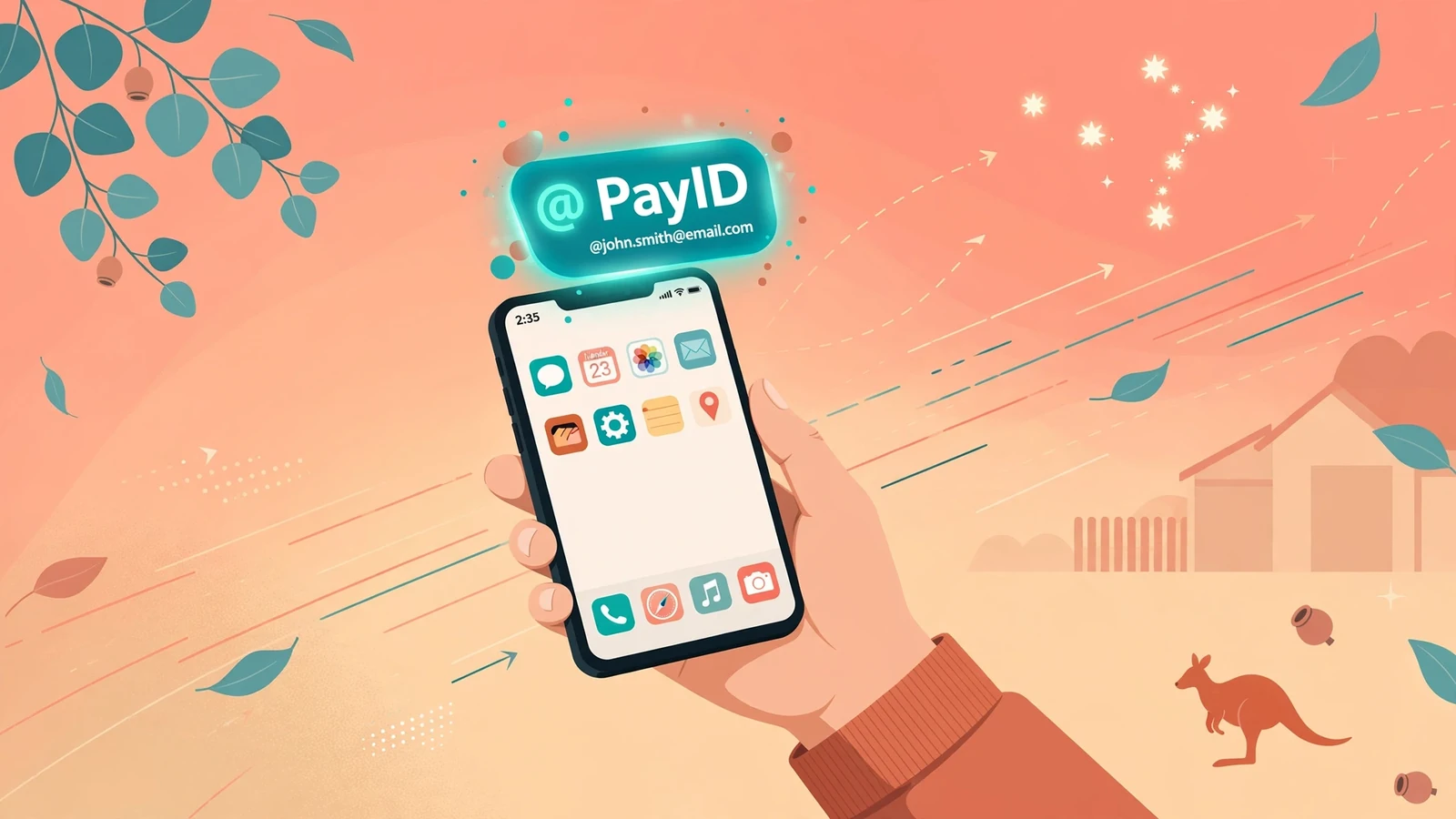
PayID replaces the long string of banking details in a transfer with a distinctive identifier. In Australia, that identifier can be a mobile number or an email address. The idea is straightforward: use a detail people are more likely to remember than a bank account number, and let the payment system use it to direct a transfer. It is a small change in appearance, but it alters the moment when a payment is made. Fewer digits to copy; less room for a transposed number to spoil the task.
The identifier is not the transfer itself. PayID is the system that lets a person initiate a payment with that identifier, while the New Payments Platform, usually shortened to NPP, provides the connection through which participating banks can move funds between one another. The distinction matters. A memorable address is the front of the arrangement; the underlying network does the work of carrying the payment from one bank to another.
That network is built for quick transfers. PayID transactions can be instant, so money need not travel at the pace of a paper instruction or wait for a batch of payments to be handled later. For people accustomed to digital services that respond immediately, this can seem less like a technical innovation than the removal of an old inconvenience. Yet speed in finance has consequences: it changes what people expect a payment to do, and how much waiting they consider normal.
A mobile number or email address is familiar in a way that banking codes are not. Those details already identify people in ordinary communication, so PayID borrows an existing habit and gives it a financial use. The appeal is not that the identifier makes banking intimate; it is that a payment can be addressed without asking the sender to keep a separate set of unfamiliar digits to hand. Convenience, in this case, is largely an act of translation.
The New Payments Platform is what makes that translation useful across banks. A payment system would be of limited use if a recognisable identifier worked only within one institution. NPP provides the infrastructure for quick transfers between banks, allowing PayID to function as part of a wider Australian payments environment rather than a private label for one bank’s own customers. The surface is simple. The machinery is not.
This helps explain why PayID can be described as both a payment method and an identifier-based system. The name is often used for the whole experience, even though the identifier and the network have different roles. A person enters a mobile number or email address; the system uses that unique detail to route the payment; the NPP carries the transfer between banks. What appears to be one quick action is a chain of separate jobs performed in the background.
There is a cultural story in that design. Banking has long asked people to adapt themselves to institutions: learn the codes, retain the references, check each digit, and hope the transaction reaches the intended place. PayID moves part of that burden from the person to the system. The user-facing detail becomes more human-sized, while the infrastructure absorbs the complexity. It is not the end of administrative friction. It is a decision about where that friction should sit.
Speed is the most visible promise, but recognisability is close behind. A mobile number or email address feels legible because it already belongs to everyday life. That familiarity can make the payment process feel less formal, although the transfer remains a financial act and should be treated as one. The language of ease sometimes makes systems sound casual. Money is not made less consequential by being addressed with a detail people use to receive messages.
The system’s place in discussions of new PayID pokies follows from this broad appeal: a payment method associated with fast bank-to-bank movement naturally attracts attention wherever people are comparing ways to transfer funds. But the existence of PayID as a payment system says only what the system itself can do. It does not, by itself, establish anything about the character or standing of a service that might mention it. A familiar payment route and a trustworthy destination are separate questions.
For the same reason, “new” can be a slippery word in the phrase new pokies PayID. A payment system may feel new to someone encountering it for the first time, while the underlying function is simply a more direct way to make a transfer using an identifier. The novelty lies less in the idea of sending money than in the arrangement of the parts: a memorable address at one end, a network connecting banks beneath it, and a quick movement of funds between them.
PayID’s appeal, then, is not mysterious. It makes the instruction easier to express and relies on the NPP to move the payment quickly between banks. The identifier is the visible convenience; the network is the quiet condition that makes it work. That is the whole trick.
A PayID deposit is a payment from a bank account that an online service can credit to its own account balance. In a casino cashier, the transaction is presented as a way to add funds; once the payment is recognised, the corresponding balance may appear on screen. The transfer itself can be quick. PayID deposits at online casinos are typically completed within seconds, although that describes the payment step, not every part of a user’s interaction with the site.
That distinction matters. A fast bank transfer does not make the cashier, account or games part of the banking system. The casino remains a separate service, with its own account records and transaction rules. PayID supplies a route for moving funds; it does not decide how a site displays a deposit, what balance it credits or whether a later withdrawal is approved.
A deposit, in practical terms, runs from the bank account towards the service. The cashier presents PayID as an available method, and the payment is sent through the bank. If it is processed and correctly identified, the casino balance can update rapidly. The seconds-long arrival commonly associated with PayID concerns this deposit leg. It should not be read as a promise that every site will show the funds at precisely the same moment: the visible balance depends on the service recognising and recording the payment.
The route back is not simply the same transfer in reverse. A withdrawal request begins inside the casino’s account system, not in the banking app. The service first has to decide whether the balance is eligible to be paid out and whether the request can be approved. Only after that internal stage does the payment move from the casino towards the player’s account. The bank transfer may be quick once released, but it cannot erase the time spent waiting for the casino’s decision.
That is why the word “instant” can be misleading when applied to both directions. PayID may support movement of money in and out, and the transfer leg can be fast either way. But a deposit is generally a payment initiated towards the service; a withdrawal is a request that the service must process before sending anything. One direction is a transfer. The other begins as an application.
Descriptions in specialist reviews have reported casino-initiated withdrawals being held in a pending state for 24–72 hours before funds leave the casino’s system. That period is not the PayID network moving slowly: it is time spent within the operator’s own process. Published specialist reviews also describe PayID transfers as taking 12–24 hours after withdrawal approval, with the overall time from request to receipt reported as 2–4 days where an internal pending period is included. These are reported timings, not a fixed schedule that applies to every operator or request.
Withdrawal Process
Internal Review
The casino reviews the withdrawal request to decide if the balance is eligible and if the request can be approved.
Pending Period
A period, reported by some reviews as 24–72 hours, may elapse before the funds actually leave the casino's system.
Fund Transfer
Once released, the payment travels via the PayID network to the player's bank account, a process that can take an additional 12–24 hours.
The steps therefore have separate clocks. First comes the casino’s review of the withdrawal request. Next, a pending period may elapse before the casino releases the funds. Finally, the payment travels to the account. A delay at the first or second stage cannot be diagnosed by looking only at PayID’s transfer speed. Likewise, a quick transfer after approval does not mean the original request was handled quickly.
This can make the cashier’s labels less informative than they appear. “PayID withdrawal” may describe the destination method, while the time most noticeable to the account holder is determined by the operator’s approval queue. The payment method and the payout policy are related, but not interchangeable. A service can offer PayID for incoming and outgoing payments while setting its own procedures for authorising the latter.
The difference also explains why a deposit can appear straightforward while a withdrawal feels more opaque. A successful deposit has a visible endpoint: the balance changes. A withdrawal has an intermediate status, and the payment may not yet have left the casino even though the request has been submitted. “Pending” is a status inside the service, not evidence that the bank transfer is underway.
There is a broader Australian context that should not be left outside the description. Under the Interactive Gambling Act 2001, it is illegal for operators to provide real-money online casino games, including pokies, to people physically located in Australia. PayID appearing in a cashier does not alter that legal position. Nor does a payment option establish that an operator is licensed, fair or dependable. The mechanics of a transaction explain how money may be routed; they do not make the underlying service lawful.
In this market, the technical neatness of a payment can sit beside a much less neat legal reality. A transfer may be fast, and a withdrawal may have several stages, but neither fact is an endorsement of using a real-money casino service. The banking interface concerns movement of funds. The law concerns what the operator is providing. Different questions.
A PayID transfer can look like a simple movement of money: an identifier is entered, a bank processes the instruction, and the transaction reaches its destination. In practice, the payment sits inside several systems of permission and verification. A bank may set limits or apply its own rules; the details attached to the PayID must correspond to the bank’s record; and a payment interface accepting PayID says nothing, by itself, about the status or conduct of the business receiving funds.
The first practical boundary is set by the bank. A specialist payment review describes the daily PayID transfer limit as being determined by the customer’s bank, rather than by PayID as a universal service-wide figure. That distinction matters because a limit can affect whether a transfer proceeds even when the payment details are entered correctly. The amount available for a transaction is therefore not something that can be inferred from the payment method’s name or from another person’s experience. Bank terms and account settings govern the boundary.
A limit is not simply a technical inconvenience. It is one way a financial institution manages the movement of money through an account, and it can apply before a merchant’s own transaction rules come into view. A payment that cannot be made within a bank’s settings is not made faster by a destination describing itself as a PayID venue. The payment rail does not override the account’s controls.
There is also the possibility of a block. A specialist review reports that some Australian banks, including members of the Big Four, have at times blocked PayID transfers to gambling merchants identified by the bank under its acceptable use policies. This is a reported possibility, not a settled description of every bank or every account. Policies and their application can change. A failed transfer may therefore reflect a bank decision about the recipient or transaction, rather than an error in the PayID itself.
That difference can be difficult to see from the customer-facing side. A payment screen may present a transaction as a matter of entering details, while the bank treats it as a matter of whether the payment is permitted under its own rules. The two views are not contradictory; they belong to different institutions with different responsibilities. Nor does a rejected transfer establish that a payment method is unavailable everywhere. It establishes only that this particular attempt did not pass the controls applied to it.
Identity matching is another condition, and it is less abstract. The PayID details used for a transaction must match the PayID registered with the bank. If an account holder has more than one identifier or has changed the details associated with an account, the distinction between a familiar contact detail and the bank-registered PayID can matter. A spelling or ownership mismatch is not merely cosmetic when a payment system uses the identifier to route money.
Names matter across the account relationship, too. The bank account holder’s name should match the name recorded on the relevant gambling account; a mismatch can create problems when money is being returned. This is not a guarantee that a transaction will be accepted, nor a substitute for the bank’s own verification. It is a basic consistency condition: the account receiving or sending money should not appear to belong to a different person from the one named in the related account records.
Such checks reflect a wider feature of digital payments. The interface makes a transfer feel immediate, but behind it sit records that connect a person, a bank account and a payment identifier. Convenience depends on that chain agreeing with itself. Where the chain breaks, speed ceases to be the important question.
PayID availability should also be kept in its proper place. It identifies a payment route, not the legal standing of the business using it, the fairness of any game, or whether a business will pay a customer. A payment logo is not a licence, and the ability to receive funds cannot certify the recipient. In Australia, the Interactive Gambling Act 2001 prohibits operators from providing real-money online casino games, including pokies, to people physically located in the country. That legal setting is not altered by the presence of a domestic payment method.
The distinction is especially important because familiar financial infrastructure can lend an unfamiliar business an air of ordinariness. A PayID prompt may resemble other bank transfers, but resemblance is not endorsement. The bank’s role in processing or blocking a transaction should not be confused with an assessment of the recipient’s reliability. Neither outcome proves more than the payment control itself: a transfer passed, or it did not.
In this context, the practical limits of PayID are not just a matter of typing the right identifier. They include the bank’s daily ceiling, any recipient-related restrictions the bank applies, and consistency between the PayID, bank record and account holder’s details. Those conditions can shape whether a payment moves. They cannot resolve the separate question of whether the underlying service may lawfully be provided in Australia. Infrastructure is not permission.
A payment can be quick at one point in its journey and slow at another. PayID deposits at online casinos are typically completed within seconds, but a withdrawal has to pass through the casino’s own process before money is sent. The distinction matters: the speed of a transfer method does not set the timetable for a business that has not yet approved a payout.
There is also an important Australian context. Under the Interactive Gambling Act 2001, providing real-money online casino games, including pokies, to people in Australia is illegal. The transaction details below describe reported payment terms, not an endorsement or invitation to use such services.
The minimum deposit is the smallest amount an operator says it will accept for a transaction. It is not a limit set by PayID. Reported terms commonly put starting deposits in the AU$10–AU$20 range, but a stated minimum can differ between operators and may change. It is therefore a poor measure of either the total cost of using a service or the time a payment will take.
Withdrawal minimums are a separate condition. Reported PayID minimums fall in the AU$20–AU$50 range, meaning a balance below the stated threshold may not be eligible for withdrawal through that route. A minimum is not a fee: it determines the amount that can be requested, while a fee reduces what is received or adds to the cost of processing the request.
Specialist reviews also report that some casinos charge AU$2–AU$5 per withdrawal. That should be treated as a venue-specific possibility, not a universal PayID charge. PayID itself does not impose a transfer fee; any withdrawal charge described in an operator’s terms is a separate matter. Small print has a way of acquiring practical weight once a payout is involved.
A payout timetable is best understood as a sequence. First comes the casino’s review of the request. Only after approval does the transfer move out of the casino’s system and towards the receiving account. A fast payment rail cannot shorten a review that is still underway.
Specialist reviews describe casino pending periods ranging from none to 12 hours, with manual reviews reported as taking 12–24 hours or longer over weekends. These are reported possibilities, not fixed service standards. The same review process may not apply to every request, and a venue’s stated policy is more relevant to its own timetable than a broad description of PayID.
The review stage can also depend on the casino’s assessment of the account and its verification status. That makes the time shown for a transfer method an incomplete measure of the time from request to receipt. A withdrawal may be waiting for internal approval before any PayID transfer begins. The queue comes first.
Once approved, the payment stage is distinct from the internal pending period. Descriptions of fast processing can therefore refer to different things: the time taken to approve a request, the time taken to send it, or the time until it appears in an account. Without knowing which clock is being described, a short headline about payout speed says little about the full interval.
For a clear comparison, minimums, fees and processing stages need to be read as separate terms. The deposit minimum concerns money going in; the withdrawal minimum concerns what can be requested back; a withdrawal charge concerns the cost of that request; and a pending period concerns how long approval may take. None of these figures, alone, establishes that a payout will be approved or predicts the exact time it will arrive.
This is why unusually simple claims about “instant withdrawals” deserve careful reading. PayID may move funds quickly once a payment has been initiated, but an operator’s review can sit before that transfer. A published processing estimate is not a guarantee, and a stated fee-free method does not rule out a separate operator charge if its terms specify one.
The phrase “new PayID pokies” can suggest that the payment method itself has acquired a different timetable. The more consequential variation is usually in the terms attached to the particular service: the amount accepted, the minimum eligible for withdrawal, any stated charge, and the handling of a pending request. Those details can change independently of PayID.
For Australian readers, these figures remain descriptions of reported offshore casino terms, not a recommendation. Real-money online casino games are prohibited from being provided to people in Australia under the Interactive Gambling Act 2001. A payment option, a low minimum or a fast transfer description does not alter that legal position—or turn a processing estimate into a promise.
PayID is a key consideration for Australian players looking for a convenient way to fund pokies accounts, but payment options and operator details vary. Use these verdicts to see which listed facts may be relevant before choosing a site.
SkyCrown
SkyCrown lists the Tobique Gaming Commission as its licensing authority. Its stated payout times are around 10–15 minutes for crypto and 1–5 days for fiat, with a A$30 minimum deposit.
JustCasino
JustCasino lists the Curacao Gaming Control Board as its licensing authority. No payment or deposit details are specified here.
MrPacho
MrPacho states crypto payout times of 30–120 minutes and fiat payouts of 24–72 hours. Its minimum deposit is A$30.
LevelUp Casino
LevelUp Casino lists Curacao eGaming licence OGL/2023/174/0082, associated with Dama N.V. Its minimum deposit is A$15.
Lucky Dreams
Lucky Dreams lists a Curacao licence and a A$20 minimum deposit for POLi.
House of Pokies
House of Pokies lists an international iGaming licence, though the jurisdiction is not named. PayID payouts are stated as taking 1–24 hours, and PayID deposits start at A$10; the general minimum deposit is A$30.
Uptown Pokies
Uptown Pokies lists a Curacao licence and has been operating since 2017. Its minimum deposit is A$20.
WinSpirit Casino
WinSpirit Casino lists Curacao eGaming licence OGL/2024/923/0383, associated with Antillephone N.V. Its minimum deposit is A$30.
Roby Casino
Roby Casino lists a Curacao eGaming licence held by Roby Games Ltd. No payment or deposit details are specified here.
Vegaz Casino
Vegaz Casino lists Curacao licence OGL/2024/1335/0780. Its stated minimum deposit is EUR 20.
“Best” is a useful word for a comparison and a poor substitute for evidence. In the case of PayID pokies, it can mean that a payment term is clearly stated and can be checked—not that an operator is safe, fair, lawful or likely to release a withdrawal. PayID identifies a way to transfer money. Its presence says nothing reliable about the business receiving it.
That distinction matters in Australia. Under the Interactive Gambling Act 2001, providing real-money online casino games, including pokies, to people in Australia is prohibited. Advertising those services to Australian audiences is also prohibited. A page cannot turn an unlawful offer into a sound recommendation by attaching a familiar payment method to it. Nor does PayID acceptance demonstrate a publicly verifiable licence, fairness in game outcomes or willingness to pay winnings.
There is, in other words, no responsible operator ranking to make from PayID alone. “Best” can only describe a limited set of terms in isolation, and even those terms cannot be treated as an endorsement of a real-money casino service for Australians.
PayID itself does not levy a transfer fee. Reputable venues also do not add a charge simply because a deposit or withdrawal uses PayID. That is a useful distinction: a payment network’s fee and a merchant’s fee are separate things, and a zero fee at the first level does not settle what happens at the second.
Withdrawal terms deserve particular scrutiny. A specialist affiliate review has reported cases in which some operators deduct A$5–A$10 from withdrawals below internal thresholds, with A$100 or A$200 given as common threshold points in that account. This is not a universal rule, nor a stable market standard. The relevant amount and the circumstances of any deduction would have to be stated in the operator’s own terms; a third-party report cannot establish what a particular service will charge now.
A fee schedule should therefore be read as a whole, not reduced to a headline claim such as “free PayID”. That phrase may refer only to the transfer method. It may not rule out a separate withdrawal charge, a deduction triggered by the amount requested or a condition attached to cashing out. The wording matters. So does the point at which a charge is applied.
A payment method can move funds quickly while a venue takes longer to process a withdrawal. The casino’s internal review and the transfer itself are different stages, and a comparison that collapses them into one promised time is not very informative.
Specialist reviews describe withdrawal processing as varying by venue, with reports ranging from a few hours to 24 hours after a request has been verified and approved. Those figures are not a guarantee for any individual service. They also describe processing after approval, not necessarily the time from submitting a request to receiving funds. The operator’s own terms are the place where its stated procedure should be assessed, although a stated procedure is not proof that it will be followed.
That is the limit of a speed comparison. A venue may present a short processing estimate, but PayID acceptance alone cannot verify the estimate or predict the result. A payment label is not an audit.
A meaningful comparison, if discussing payment terms in the abstract, would separate the questions rather than awarding a single “best” label:
These are tests of transparency, not assurances of quality. Publicly verifiable licensing would be essential before any operator could be recommended or promoted. In Australia, however, a foreign licence does not make the provision of prohibited online casino services to people here lawful, and PayID cannot fill that gap. Consequently, no operator should be presented as a recommended destination for Australian real-money play.
There is a dry mismatch in the phrase “best PayID pokies”: the payment feature is easy to name, while the claims that would make a service worth recommending are not established by the feature at all. The fee may be zero; the risk of mistaking that for a guarantee is not.
A careful use of “best” here is therefore narrow. It describes a payment term that is explicit, distinguishable from other charges and open to verification—not a casino, not a promise of fast cash-out, and not evidence that a service is lawful or dependable. PayID is a transfer option. Nothing more is proved by its appearance.
PayID has a hard edge that matters whenever money moves: once a payment is confirmed, it cannot be reversed. That is a feature of the transfer, not a judgement about the purpose of the payment or the business receiving it. A completed transfer does not become refundable merely because a transaction later proves regrettable, disputed or connected to terms that were not fully understood.
This distinction is easy to lose in the language of online cashiers, where a button can make a financial decision look like a routine click. But the payment system and the recipient’s rules are separate things. PayID moves funds; it does not assess whether a service is lawful, decide whether a bonus has been earned, or settle a disagreement over a balance. Once the transfer is confirmed, its irreversibility is the important practical fact.
That has particular significance in Australia. Under the Interactive Gambling Act 2001, operators are prohibited from providing real-money online casino games, including pokies, to people physically located in the country. The restriction concerns the service offered, not the particular payment rail used. A PayID option does not change that legal position. Payment availability is not permission.
The bonus question belongs to a different layer of the transaction. A bonus may be presented as additional playing credit, but its terms can make that credit conditional rather than freely withdrawable. Wagering requirements specify how much play must take place before associated funds can be withdrawn. A specialist review describes requirements in the range of 30x–45x the bonus amount. That figure should be read as a report about bonus terms, not as a universal rule or a promise that a particular offer will use those conditions.
The multiplier can obscure the underlying obligation. A bonus balance is not equivalent to cash already available to withdraw; the requirement attaches conditions to what happens before a withdrawal can be made. The precise calculation, eligible games, contribution rules and expiry provisions depend on the terms attached to the offer. A headline amount alone cannot explain the full cost of accepting it. Nor can a fast payment make a demanding wagering condition less demanding.
There is a sharp asymmetry here. The transfer may be final at the moment it is confirmed, while the bonus remains subject to conditions that unfold later. The payment mechanism is immediate in its consequence; the promotional terms may take time to reveal their full weight. That imbalance is one reason the word “bonus” can be misleading: it sounds like a gift, while the attached requirements can function more like a contract with several moving parts.
Where bonus rules impose a maximum bet, exceeding that limit may void the bonus and associated winnings. That condition is not a minor technicality when funds are tied to wagering. The same applies to rules against multiple accounts: creating more than one account with the same casino can lead to a ban or forfeiture of winnings. These are operator terms, not protections supplied by PayID, and they do not alter the irreversibility of a confirmed payment.
The law also changes how these mechanics should be described. Real-money online casino services are not lawful offerings for operators to provide to people in Australia. An explanation of payment finality or bonus terms is not an endorsement of those services, and a payment option cannot turn a prohibited service into a permitted one. There is no sensible basis for treating a familiar transfer method as evidence that the transaction behind it is acceptable.
For people considering the meaning of a payment already made, the distinction remains important: PayID confirmation settles the transfer, not every question about the recipient’s conduct or the surrounding terms. A bonus dispute and a completed payment are not the same event. The first concerns conditions attached to an offer; the second concerns money that has already been sent. Conflating them can leave the impression that reversing the payment is a remedy for unmet bonus conditions. It is not.
The machinery is simple. The consequences are not.
Choose PayID in the casino cashier and make the transfer from your bank account. Your PayID details must match the PayID registered with your bank.
Typical minimum deposits are A$10–A$20, though some operators accept as little as A$5. Check the minimum shown in the casino cashier.
After casino approval, funds usually arrive the same day, often within 12–24 hours. Casino checks and pending periods can make the total time from request to receipt around 2–4 days.
PayID is designed for secure transfers, but confirmed transactions are irreversible. Check the recipient details carefully, and remember that using PayID does not establish whether the casino itself is trustworthy.