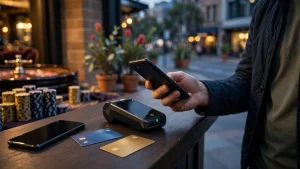
A Trustly reference alone does not show whether an Australian casino accepts deposits through it or supports withdrawals.

Interest in Trustly alongside Australian casino terminology reflects a familiar way of thinking about money: a payment method is often treated as a practical bridge between an account and a service. Yet familiarity with payment options does not settle whether a particular method is accepted in a particular setting. In Australia, people move readily between cards, mobile wallets and services linked to banks, including PayPal. That flexibility describes a broad consumer habit, not a guarantee about any casino payment arrangement.
The distinction matters because payment names can acquire a life of their own. A method may be recognisable in one commercial context and appear in a discussion of another, while the details behind the label remain unsettled. A mention of Trustly beside Australian online casino language therefore cannot, by itself, establish that an operator accepts it, that an account can be funded through it, or that it is available to people in Australia. Those are separate claims, and none follows simply from the method’s presence in a heading, a graphic or a list.
Trustly availability can vary between casino sites, so check the payment options shown for Australia before choosing where to play. These operator notes highlight the specific licensing, deposit, and payout details available for this list.
SkyCrown
SkyCrown lists a Tobique Gaming Commission licence and a minimum deposit of A$30. Its stated payout times are around 10–15 minutes for crypto and 1–5 days for fiat.
JustCasino
JustCasino is listed with a Curacao Gaming Control Board licence.
MrPacho
MrPacho lists a minimum deposit of A$30. Its stated payout times are 30–120 minutes for crypto and 24–72 hours for fiat.
LevelUp Casino
LevelUp Casino lists a Curacao eGaming licence, OGL/2023/174/0082, held by Dama N.V. The minimum deposit is A$15.
Lucky Dreams
Lucky Dreams lists a Curacao licence and a minimum deposit of A$20 when depositing via POLi.
House of Pokies
House of Pokies lists an international iGaming licence, though the jurisdiction is not named. PayID payouts are stated as taking 1–24 hours; the minimum PayID deposit is A$10, with A$30 given as the general minimum.
Uptown Pokies
Uptown Pokies lists a Curacao licence and says it has been operating since 2017. Its minimum deposit is A$20.
WinSpirit Casino
WinSpirit Casino lists a Curacao eGaming licence, OGL/2024/923/0383, held by Antillephone N.V. The minimum deposit is A$30.
Roby Casino
Roby Casino lists a Curacao eGaming licence held by Roby Games Ltd.
Vegaz Casino
Vegaz Casino lists a Curacao licence, OGL/2024/1335/0780. Its stated minimum deposit is EUR 20.
This is where ordinary payment culture can mislead. Cards, mobile wallets and bank-linked services are woven into everyday transactions; shifting among them is unremarkable. In a casino-related setting, that familiarity may make another payment name seem like a natural extension of the same menu. But the ease with which Australians change between familiar tools says nothing about the arrangements of an individual service. Habit is not a cashier.
The wording around Australian pokies or casino payments can also blur different questions. One concerns the way people expect to move money online. Another concerns whether a particular payment method is supported by a particular business. A third concerns whether that business may lawfully provide online casino games to people located in Australia. The questions sit close together in everyday language, but they do not share an answer. Payment compatibility cannot establish legal status, and a familiar payment habit cannot establish compatibility.
The legal setting is unusually decisive. Under the Interactive Gambling Act 2001, operators may not provide real-money online casino games, including pokies and table games, to people physically located in Australia. The Australian Communications and Media Authority is responsible for enforcing that law. The rule concerns the operator’s conduct; it does not explicitly make an Australian player criminally liable merely for using an offshore site. That distinction is not an endorsement or a promise of access. Offshore casino activity is subject to active blocking and enforcement, and Australian consumer law does not protect people who use offshore casinos.
The result is a mismatch between the language of consumer choice and the legal conditions around the service. Payment discussions often present the matter as if it were a routine comparison of options: one method alongside another, each ready to be selected. But the Australian framework does not treat real-money online casino games as an ordinary local product category. A payment label cannot turn a prohibited service into a lawful one, any more than a familiar card or wallet changes the law governing the operator.
That context also explains why broad claims about Australian casino payments need careful reading. A statement that a method is used in Australia may refer to ordinary retail activity, a different kind of online service, or a market outside Australia. It does not necessarily describe a real-money casino service offered lawfully to Australian residents. The same caution applies when a payment name appears beside terms such as “mobile casino” or “pokies”: the combination of words does not prove that a working, lawful arrangement exists.
There is a social story in this gap. Modern payment systems encourage the expectation that digital transactions should travel smoothly across services, while gambling regulation draws a boundary around which services may be offered at all. The convenience of switching between payment tools belongs to one part of daily life; the restriction on online casino provision belongs to another. They coexist, but one does not resolve the other.
So the Australian context is not simply a question of whether people recognise a payment name. It is a question of what a payment claim actually establishes, and what it leaves untouched. Familiarity with cards, mobile wallets and bank-linked services explains why people may expect online payments to be interchangeable. It cannot demonstrate that Trustly is accepted for casino use in Australia, nor can it make an offshore casino service lawful. A small distinction, with large consequences.
A request for a small Trustly deposit often carries two assumptions: that an Australian-facing casino accepts Trustly, and that the payment can be made at a particular low amount. Neither follows from the wording of a payment claim. A name appearing beside a deposit option does not, by itself, establish that the option is available to a person in Australia or explain the terms attached to it.
The distinction matters because everyday Australian payment habits can make a casino payment sound more familiar than it is. Contactless credit and debit cards are accepted almost everywhere in Australia, as are mobile wallets such as Google Pay and Apple Pay. That describes the wider payments landscape, not the rules for gambling transactions. A payment method’s popularity in shops does not establish that it can lawfully or practically be used to fund online casino play.
Nor does the presence of bank-linked services in ordinary commerce settle whether Trustly is accepted by a particular gambling operator. “Bank-linked” is a broad description, not a shared technical standard. Services can differ in how they connect to accounts, which jurisdictions they cover and what transactions their participating businesses may process. Treating one familiar payment category as proof of another’s availability is a shortcut, not a reliable conclusion.
A stated minimum deposit is similarly specific. It belongs to the terms of an individual service and may depend on the payment route selected. A low figure in a headline or promotional panel cannot establish the amount that would appear in a cashier, or whether the option is available to an Australian customer at all. The currency, conditions and eligibility attached to a payment claim matter as much as the headline figure. Without those details, “low deposit” is an impression rather than a usable term.
This is especially relevant to Trustly wording. A statement that a casino accepts Trustly deposits would need to be current and tied to the relevant country, account type and transaction. It should not be inferred from a general list of payment brands, a logo, or a description of banking services. Availability can be presented broadly while the actual cashier displays a narrower set of options. Payment language often looks more definite than the transaction it describes.
There is also a legal boundary that a cashier cannot erase. Under the Interactive Gambling Act 2001, it is illegal for operators to provide real-money online casino games to people physically located in Australia. This applies to online casino-style games offered to Australian customers, whether the proposed payment is described as Trustly, a card, a wallet or a bank transfer. A payment option does not change the legal character of the service it is intended to fund.
The law places the prohibition on operators; it does not explicitly criminalise an individual for using an offshore site. That distinction should not be mistaken for consumer protection. Australian consumer law does not protect people who use offshore casinos, leaving a person with less recourse if a payment or account dispute arises. Familiar payment language can lend a transaction an air of ordinary commerce. The underlying service remains a different matter.
For that reason, claims about depositing with Trustly should be read narrowly. A reference to the method is not confirmation of a working deposit route, an Australian minimum, or a particular fee. Those are separate terms, and only a clear statement from the relevant service could describe them. A search result or payment badge does not supply the missing conditions by implication.
The same caution applies to phrases such as “best casino” when they are attached to Trustly deposits. A confident label cannot establish that an operator is permitted to offer online casino games to Australians, nor does it prove that Trustly is available in the cashier. Ranking language is not a substitute for a defined payment condition. In this market, it can obscure the more important question: what service is being offered, and under what legal and consumer protections?
The local familiarity of cards and mobile wallets explains why payment terms can look uncomplicated. It does not make every online transaction equivalent. A card tapped at a shop and a deposit intended for an online casino are not interchangeable contexts, and a bank-linked payment brand is not evidence of a casino’s eligibility or acceptance. The technology may sound routine. The legal setting is not.
So a low-deposit claim and a Trustly label should not be treated as a complete description of an Australian casino payment. At most, they name a proposed method and an advertised threshold. They do not establish lawful availability, the actual cashier terms, or protection for a customer using an offshore casino. Headlines travel lightly; payment conditions and legal responsibility do not.
“Instant” sounds like a property of a payment method: a button is pressed, money moves, and the waiting ends. A withdrawal is less tidy. It can involve a casino approving a request, identity checks, and the payment route itself. A Trustly logo or mention, by itself, does not establish how long any of those stages takes. It cannot turn a withdrawal into a guaranteed immediate payment.
That distinction matters in searches for instant Trustly withdrawals in Australia, especially when the wording also invokes real-money play or pokies. A deposit and a withdrawal are not mirror images. The fact that a payment method appears at one stage does not establish that it can be used at another, or that money will reach an account on a particular schedule. The timing of Trustly withdrawals cannot be stated as a general promise.
The word “instant” often compresses several separate events into one appealing label. A request might be submitted; an operator might review it; a payment might then be initiated; and a financial institution might process the transfer. Without a confirmed arrangement and terms for each stage, there is no sound basis for treating the whole sequence as immediate. Nor does “instant” necessarily describe when funds become usable. The adjective does a great deal of work.
Online casinos commonly ask customers to complete a Know Your Customer assessment before they can make financial transactions. This is an identity and account verification process, and it may matter at withdrawal time even if an account has already been used for play. A request for payment does not, on its own, mean that every check has been completed.
That makes timing claims difficult to interpret. A stated processing speed, where one is offered, may concern only one stage and may not account for an outstanding verification request. Conversely, the payment route cannot be blamed for a delay that occurs before a transfer is sent. The practical point is not that every withdrawal will be delayed, but that a payment logo does not explain what must happen before funds move.
Verification has a social purpose as well as an administrative one: financial services are expected to connect transactions to identifiable customers. In online gambling, that scrutiny can sit awkwardly beside the promise of frictionless play. A system that treats identity as necessary cannot honestly be described as a simple matter of pressing a button. Paperwork has a way of reappearing at the least theatrical moment.
Searches that pair instant withdrawals with a no-deposit bonus join two different ideas. A bonus offer, where one exists, would not demonstrate that a withdrawal method is available, that a payment request will be approved, or that funds will arrive immediately. Those are separate conditions, not consequences of the same phrase.
More broadly, a claim about “real money” does not settle whether an online casino service is lawful in Australia. Under the Interactive Gambling Act 2001, operators are prohibited from providing real-money online casino games to people in Australia. That includes casino-style games such as poker, blackjack, roulette and slots. The Australian Communications and Media Authority is responsible for enforcing the Act. The prohibition is directed at providers; it does not explicitly make an individual player criminally liable for using an offshore site.
That legal distinction should not be mistaken for consumer protection. Australian consumer law does not protect people who use offshore casinos. A withdrawal promise made in that setting does not gain the safeguards of a lawful domestic online casino market merely because it is expressed in familiar payment language. The law is not a receipt.
For that reason, “instant Trustly withdrawal casino” is not a reliable description of a settled Australian service. It combines a payment name, an outcome and a speed claim, but none proves the others. A payment method being referenced would not by itself confirm withdrawal support; support would not establish a processing time; and a fast transfer would not resolve the legal position of the underlying gambling service.
The more precise description is also the less exciting one: withdrawal timing depends on more than a payment label, while identity checks may precede financial transactions. No general instant timetable follows from the word Trustly. And in Australia, the wider question is not simply how quickly an offshore casino might pay, but what protection is absent when a player relies on its promise.
A request for casino sites associated with Trustly sounds like a question about payment compatibility: which operator accepts the service, and whether that acceptance applies to Australian customers. But a payment label, where it appears, answers only a narrow question. It does not establish that a service is available to someone in Australia, that a transaction would be permitted, or that using the site would come with meaningful local consumer protection.
The year in the wording does not alter that distinction. Payment arrangements can change, while a search result or an operator’s general payment information may not reflect the position for a particular country. An apparent reference to Trustly therefore cannot, by itself, settle whether an Australian resident could use it for a casino transaction. Nor does the description “best” supply a useful standard: a ranking would need reliable evidence about the products being compared, and a payment method alone says little about the legal position of the activity.
That legal position is unusually consequential. Under the Interactive Gambling Act 2001, operators are barred from providing online casino games to people in Australia. The rule concerns the service offered to customers physically in the country, rather than the location suggested by an operator’s branding or payment arrangements. The Australian Communications and Media Authority is responsible for enforcing the Act.
The law places the obligation on operators, not on the individual player in the same way: it does not explicitly make a person criminally liable for using an offshore casino. That distinction can be mistaken for reassurance. It is not a declaration that offshore casino services are lawful to provide in Australia, nor does it make a payment route evidence of official approval. Enforcement and consumer protection are separate matters.
Most importantly for anyone weighing a payment claim, Australian consumer law does not protect people who use offshore casinos. A dispute involving an account, a payment, or an unpaid balance may therefore leave the customer without the protections they might associate with a domestic consumer transaction. The absence of player criminal liability does not fill that gap. It only describes one part of the legal arrangement.
This is where a broad phrase such as “casinos that take Trustly” can conceal more than it clarifies. It combines two questions—whether a payment method is named and whether an online casino service can lawfully be offered to Australians—as though one answer settled both. It does not. A payment claim cannot turn a prohibited service into a lawful one, and a list of purportedly compatible sites would not resolve the exposure involved in using an offshore casino.
The Australian framework reflects a choice about who may provide these games, even as offshore operators and payment systems can make the boundary look less visible to consumers. The practical ease implied by a cashier option is not a substitute for legal standing or local remedies. A polished interface is still an interface.
So the 2026 Trustly question can be framed narrowly: a payment reference may indicate what an operator says it supports, but it cannot establish that casino services are legally available to Australians or protected under Australian consumer law. The distinction matters more than a ranking. No payment method can erase it.
A “best” label can make a payment claim look settled before its meaning has been examined. In practice, a ranking may combine different questions: whether a payment method is named, whether it is available to customers in Australia, and whether it can be used for the particular transaction being discussed. Those are not interchangeable claims. A logo or a place on a list cannot answer all three.
That distinction matters for Trustly. General familiarity with bank-linked payments does not establish that a particular casino accepts Trustly, or that a claim about a Trustly casino site applies to Australian residents. The wording of a promotional page may suggest a connection without explaining what that connection means. “Supported” could refer to an account option, a payment made in another country, or information that has not been kept current. Confidence is not a payment condition.
Bonus language needs the same restraint. A casino bonus associated with Trustly does not, by itself, confirm that Trustly is an available payment method or that any offer is applicable in Australia. Nor does the presence of a payment option make an online casino lawful to provide here. A polished website can arrange these subjects side by side; the arrangement is not proof.
There is a larger boundary behind the small print. Under the Interactive Gambling Act 2001, operators are prohibited from offering online casino games to Australian residents. The law does not explicitly criminalise Australians for using offshore sites, but that distinction should not be mistaken for consumer protection. Australian consumer law does not protect players who use offshore casinos. The operator’s claim and the player’s recourse are separate matters.
This makes a “best” list an especially blunt instrument. A ranking can compare only what it actually establishes, and a payment label cannot stand in for evidence about the operator, the service or its legal position in Australia. Neither a high placement nor repeated wording across websites changes the underlying rule. Repetition is not verification.
A careful assessment therefore separates claims rather than allowing one to validate another. Is the statement specifically about Trustly, or merely about bank-linked payments in general? Does it state that the payment option is available to Australian customers, rather than describing another market? Is the claim presented as a current condition, or as a broad promotional phrase? These questions do not turn an offshore casino into a protected or lawful service. They clarify what the claim says—and, just as importantly, what it does not.
The appeal of a neat list is understandable: it compresses uncertainty into a row of names and labels. But where operators are prohibited from offering online casino games to people in Australia, a ranking should not be read as a recommendation or as assurance of access. A payment claim can be assessed for precision without endorsing the service attached to it. The distinction is unglamorous. Necessary, all the same.
A casino game and the method used to move money belong to different questions. A payment option, even if displayed beside a game, would not establish that the game may lawfully be supplied to someone in Australia. Nor does a game’s presence on a website prove that Trustly can be used to pay for it. The two claims need separate evidence; neither can stand in for the other.
The legal position is more decisive than a cashier menu. Under the Interactive Gambling Act 2001, operators must not provide real-money online casino games to people in Australia. The prohibition covers online casino-style services, including poker and table games, as well as slot-style products. The Australian Communications and Media Authority oversees enforcement of that law. A payment label cannot alter the character of the service or grant an operator permission to offer it.
That distinction matters whenever Trustly is described alongside casino games. Payment compatibility, if established for a particular service, would answer only a technical or commercial question about how funds might be handled. It would not answer whether an operator is permitted to provide real-money casino play to Australian residents. A list of payment methods is not a licence, and it cannot soften a prohibition.
The law does not explicitly make an individual player’s use of an offshore casino a criminal offence. That narrow point should not be mistaken for consumer protection. Australian consumer law does not protect people using offshore casinos, leaving them without the ordinary local safeguards they might assume apply to a domestic service. The distinction is stark: the law is directed at operators, while the player may still be exposed to practical risks without local consumer recourse.
Searches linking Trustly with casino games therefore combine two separate matters: a payment claim and a claim about access to a prohibited service. Neither a Trustly reference nor an apparent game catalogue changes the Australian legal framework. The cashier is not a legal instrument.
Payment habits in Australia can make different ways of moving money feel interchangeable. Cards, mobile wallets and services linked to bank accounts all sit within ordinary consumer life; people are comfortable switching among them. Contactless card payments and mobile wallets such as Apple Pay and Google Pay are accepted almost everywhere in the country.
That familiarity describes a broad payment culture, not a promise about every service. A method being common in shops, or familiar through bank-linked payments such as PayPal, does not show that a casino accepts Trustly. Nor does a casino mentioning one kind of digital payment establish that another bank-connected service is available. Similar language can conceal different arrangements.
The distinction matters because payment labels are often treated as shorthand for compatibility. They are not. Acceptance depends on the particular service and the transaction, while a general account of Australian payment habits says nothing about an individual casino’s cashier. A search for an Australian casino using Trustly may begin with a plausible assumption: that a country accustomed to cards, wallets and bank-linked services must also use any comparable method. The assumption does not follow.
There is a larger local contradiction here. Australia has adopted convenient ways to pay in everyday commerce, yet the law prohibits operators from providing real-money online casino games to people physically in the country. The Interactive Gambling Act 2001 is enforced by the Australian Communications and Media Authority. A familiar payment routine cannot turn a prohibited service into a lawful one, or establish that a payment channel is available.
The law’s focus is on operators; it does not explicitly criminalise players who use offshore sites. That distinction should not be mistaken for consumer protection. Australian consumer law does not protect players using offshore casinos. Familiarity is not a safeguard.
So an Australian casino with Trustly cannot be inferred from the country’s comfort with digital payments. Cards, mobile wallets and bank-linked services explain how people commonly pay across daily life. They do not verify a casino payment claim, and they do not settle the separate question of whether an online casino service may lawfully be offered to Australians. A habit is not evidence.
A Trustly logo beside a cashier can suggest that a payment service is relevant, but it does not establish that withdrawals are available through it. Deposit and withdrawal routes are not automatically interchangeable. A casino may list a method for one transaction without confirming that it can return winnings by the same route, or setting out the conditions that would apply.
That distinction matters when a page pairs Trustly with “pokies” or presents the service as an Australian withdrawal option. The wording may sound specific; the practical details are another matter. Without clear terms for withdrawal eligibility, fees and processing, a logo cannot answer whether a transfer is supported. Nor does it establish how long a transaction would take. No speed should be inferred from the payment method’s name.
There is a more basic Australian context. Under the Interactive Gambling Act 2001, providing real-money online casino games to people located in Australia is prohibited. That category includes poker, table games and pokies. The Australian Communications and Media Authority enforces the Act. A payment mark does not alter the legal status of the service displaying it.
The law does not explicitly make a player’s use of an offshore casino a criminal offence. That does not make the arrangement protected: Australian consumer law does not protect people who use offshore casinos. The difference between a restriction on operators and the position of players is important, but it is not a consumer guarantee.
A cautious reading of any withdrawal claim therefore separates three things: the appearance of a payment brand, the operator’s stated transaction terms, and the legal setting in which the service is offered. Only the first may be visible in a logo. The rest requires explicit, current information—and even complete payment terms would not turn a prohibited service into a lawful one for Australian residents.
A badge is not a promise.
A payment method is not established by the wording of a casino page, a logo beside other payment marks or a general claim that bank-linked services are supported. Acceptance concerns a particular transaction: whether the method is available to a customer in Australia, whether it applies to deposits, and what conditions govern its use. Those details cannot be inferred from the name Trustly alone.
That distinction matters because “paying with Trustly” can suggest more than one thing. It may imply that Trustly appears among payment options, that a deposit can be completed through it, or that the service is supported for Australian customers. These are separate claims, not interchangeable descriptions. None should be treated as settled merely because an operator or third party uses the payment method’s name.
Nor does the phrase “Trustly casino payment method” establish a fee, minimum deposit, processing route or other transaction term. Such conditions belong to the specific arrangement being offered; they cannot safely be borrowed from another payment service or assumed from a familiar bank-linked brand. The cashier is where an operator presents payment options, but a displayed option alone would still say little about the rules attached to a transaction.
The language around pokies and payment methods can make the two seem like a package. They are not. A payment label does not establish that a particular game is offered, that real-money play is lawful in Australia, or that a transaction is available to a local customer. Those distinctions are especially important in a market where online casino-style games for people in Australia are prohibited for operators under the Interactive Gambling Act 2001.
The law places the burden on operators, not players: it does not explicitly criminalise a person for using an offshore site. That does not make such use protected. Australian consumer law does not protect players who use offshore casinos. A payment name cannot change that position.
A payment method and a game are separate parts of an online casino service. A cashier might list ways to move money, while a games catalogue describes what the operator offers; seeing one does not establish anything about the other. A page that mentions Trustly alongside online slots therefore does not, by that association alone, demonstrate that the payment method works for those games or that the service is available in Australia.
There is a more consequential boundary. Under the Interactive Gambling Act 2001, operators may not provide real-money online casino games to people in Australia. That prohibition includes slots, as well as other casino-style games. The law addresses the service offered to people physically in the country, not merely the label attached to a payment option. A familiar banking method cannot turn a prohibited service into a lawful one.
This distinction matters because search results can compress several claims into a single phrase: that a casino offers online slots, accepts Trustly, and serves Australian residents. Each claim would need to be considered separately. Payment compatibility, even if stated by an operator, would not establish that the games may lawfully be supplied to Australians.
The Interactive Gambling Act is enforced by the Australian Communications and Media Authority. It does not explicitly criminalise players who use offshore casino sites, but that does not provide a local consumer safeguard. Australian consumer law does not protect people using offshore casinos.
The neat pairing of a game category and a payment name can suggest a straightforward product. The legal position is less tidy. A payment route is not permission to provide the game.
Check the casino cashier for American Express before depositing. Some casinos that support Amex deposits include Jackpot City Casino, Spin Palace, Ruby Fortune, Ignition Casino, Joe Fortune and PlayAmo.
Limits are set by each casino and can vary. Amex transaction limits are usually higher than those for Mastercard and Visa.
Amex casino deposits are processed instantly. Withdrawals can take up to five days to clear.
Yes, some Australian-facing casinos accept Amex deposits, though not all do and Australian banks may block gambling transactions. Some casinos also do not allow withdrawals to Amex.
Amex deposits typically have no fee, but a casino may add a 1.5% surcharge, and Amex cards incur a 3% currency conversion fee. Withdrawal fees may also apply.
Amex deposits are processed instantly.