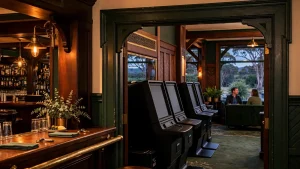
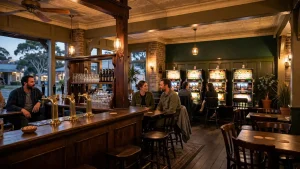
Venue opening times may differ from machine hours, while payment options and cashless play do not settle the legal questions around online pokies.
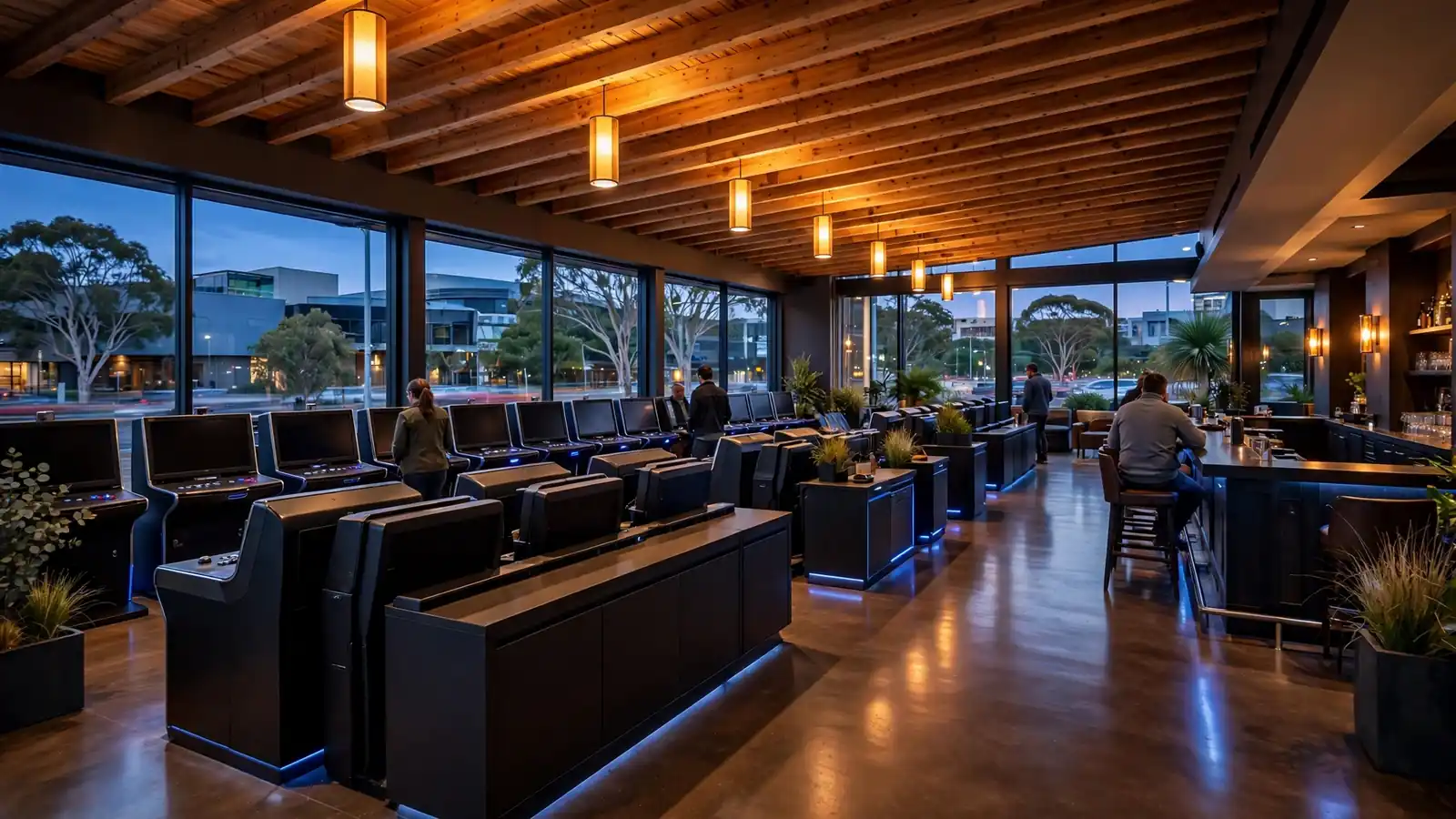
A venue’s opening time and the time its pokies are available are related, but they are not necessarily the same thing. A club or hotel may be open for meals, drinks or other activities while its gaming area is closed. Conversely, the hours shown for the venue as a whole may not make clear when machines can be used. For anyone trying to establish whether pokies are open in Adelaide at a particular time, the distinction matters more than the broad label “open”.
Opening hours are often presented as one simple span. In practice, different parts of a venue can follow different schedules, and a listing may describe the premises rather than every activity inside them. A building being open does not, by itself, confirm that its gaming machines are operating. Nor does a general closing time necessarily explain when machine play stops. The useful question is not only whether the doors are open, but whether the gaming area is available at that time.
That distinction is easy to overlook because public information tends to compress complicated arrangements into a single status: open or closed. The label is convenient for a directory, less so for a person planning around a particular service. A dining room, bar and gaming area may not share identical operating hours. Without a venue-specific confirmation of machine availability, an opening-hours listing cannot settle the matter.
The same caution applies to early and late hours. A request to find pokies available early in Adelaide, or still operating late, is really a request for the machine schedule, not merely the venue’s general timetable. A listed opening time can be a useful starting point, but it should not be treated as proof that play begins then. The actual schedule may be stated separately, may change, or may need to be confirmed directly with the venue.
“Open now” is particularly dependent on the moment at which the information is checked. A directory can display a venue as open while its gaming area is unavailable, or show hours that do not reflect a recent operational change. Public listings are snapshots, not promises. The distinction is ordinary enough to be overlooked and important enough to cause a wasted trip.
There is a further reason machine hours deserve their own attention: the rules governing venues are tied to the period when machines are running. A report published by regionriverina.com.au describes a requirement that, from 1 July, venues operating more than 20 gaming machines have a dedicated responsible gambling officer (RGO) on duty during machine operation. This is not simply a staffing detail attached to the venue’s general opening hours. The stated duty is connected to the machines being in use.
That connection changes how the timetable should be understood. If the machines are operating, the reported requirement concerns the presence of a designated officer; if they are not operating, the condition described in the report is not framed as a general requirement for every hour the venue is open. The distinction is modest on paper, but it makes machine hours part of the venue’s operating conditions rather than just a subheading on a public timetable.
The same report says venues have a one-month grace period in which to remove signage and put responsible gambling officers in place. That describes a transition, not a permanent substitute for the requirement. Signage and staffing are different matters: removing a sign does not fulfil the role of an officer, and having an officer on duty does not make every sign appropriate. In particular, signage directing patrons towards gaming areas or cash access points is subject to separate placement restrictions; the transition period should not be read as permission to retain signs in locations where they are not allowed.
The presence of an RGO also gives a practical meaning to the idea of oversight while machines are running. The role is not just a name on a roster. Its relevance lies in the operating period: a venue with machines in use is expected, under the reported arrangement, to have a designated person on duty for responsible gambling matters. That makes the schedule more than a convenience for patrons. It is also the span during which a venue’s obligations are active.
A further reported measure is a gambling incident register. Venues will be required to record incidents, including situations in which a patron’s behaviour suggests they may be at risk of gambling harm or already affected by it. The register shifts attention from general policy statements to events as they occur. It creates a record of concerns that might otherwise remain a private exchange between a patron and staff, or be lost once a busy shift ends.
The register and the RGO requirement belong to the same wider idea: responsibility is not confined to a poster at the entrance or a policy kept out of sight. It has to operate in the room, during the period when machines are available, and it includes recognising when someone may be struggling. This is a more demanding conception of venue management than simply keeping the doors open and the machines powered.
It also explains why a venue’s stated hours cannot answer every practical question. The general timetable says something about access to the premises; the machine schedule says when a particular activity is taking place; and the obligations described in the report attach to machine operation. These are overlapping clocks, not one clock with different labels. A venue can be open without machines running, and machine operation can bring specific responsibilities into effect.
For Adelaide listings, the most reliable approach is therefore to treat “open” as an incomplete description. A current venue listing can establish the broad opening window, but confirmation of gaming-area hours is needed to establish when pokies are available. Where the distinction is unclear, a direct check with the venue is more meaningful than inferring machine access from a bar or club’s general schedule. This is especially relevant when the timing is the point of the visit rather than a minor detail.
The year attached to a change also matters. A rule described as starting “from 1 July” should be read with its report and current applicability in mind, rather than casually assigned a year that is not stated. The report’s wording identifies the commencement date but does not, by itself, establish what a particular Adelaide venue is doing at a particular hour. A broad operational requirement cannot supply a venue’s individual timetable.
The difference between opening hours and machine hours may seem bureaucratic, but it reflects a wider choice about what a venue is responsible for. The premises are not treated as a single undifferentiated space: activities have their own availability, and the operation of gambling machines brings duties that are tied to that activity. The schedule is therefore both practical information and part of the framework for how the venue is expected to manage play.
A timetable tells only part of the story.
Choosing a pokies site in Adelaide means considering practical details such as licensing, deposit options and payout methods. This guide offers a concise reference to help you assess the available information before deciding where to play.
SkyCrown
SkyCrown lists a Tobique Gaming Commission licence and a A$30 minimum deposit. Its stated payout times are around 10–15 minutes for crypto and 1–5 days for fiat.
JustCasino
JustCasino lists a licence from the Curacao Gaming Control Board. The available details here are limited to its licensing.
MrPacho
MrPacho lists crypto payouts of 30–120 minutes and fiat payouts of 24–72 hours. Its minimum deposit is A$30.
LevelUp Casino
LevelUp Casino lists a Curacao eGaming licence, OGL/2023/174/0082, held by Dama N.V. Its minimum deposit is A$15.
Lucky Dreams
Lucky Dreams lists a Curacao licence and a A$20 minimum deposit for POLi. Those details give readers a specific deposit option to consider.
House of Pokies
House of Pokies lists an international iGaming licence, though the jurisdiction is not named in the available information. PayID payouts are stated as 1–24 hours, and the minimum deposit is A$30, or A$10 with PayID.
Uptown Pokies
Uptown Pokies lists a Curacao licence and has been operating since 2017. Its minimum deposit is A$20.
WinSpirit Casino
WinSpirit Casino lists a Curacao eGaming licence, OGL/2024/923/0383, held by Antillephone N.V. Its minimum deposit is A$30.
Roby Casino
Roby Casino lists a Curacao eGaming licence held by Roby Games Ltd. The available details here are limited to its licensing.
Vegaz Casino
Vegaz Casino lists a Curacao licence, OGL/2024/1335/0780. Its minimum deposit is EUR 20.
“Best” can mean a game with an appealing theme, a pace that suits a player, features that are easy to follow or a published return-to-player figure that looks favourable beside another. Those are different judgments, and none turns a pokie into a dependable source of winnings. The word sounds like a verdict. In practice, it often bundles together preference, mathematics and marketing.
RTP, or return to player, describes a game’s theoretical return across a very large volume of play. It is not a forecast for an individual session, nor a promise that a particular player will receive that share back. A figure can help compare game settings when it is accurate and applicable, but it cannot tell what will happen in the next few spins. A useful statistic, with a small jurisdiction.
There is also a complication behind comparisons of the same game. A specialist review reports that some providers allow casinos to choose between multiple RTP settings for a given pokie. In that situation, the title alone does not establish which return setting is in use at a particular casino. The same game may therefore be configured differently across venues. That claim should be treated as a reported possibility, not as a universal description of every provider or every machine.
A game’s return figure is only meaningful when the relevant setting is known. A general description of a title, a screenshot or an old comparison may not show which configuration applies to a specific machine. Nor does a higher published RTP mean that the game will pay more during a short visit. It describes a long-run statistical property, not an appointment with luck.
The other half of the picture is randomness. Each pokie spin is an independent event determined by a Random Number Generator. The outcome of one spin does not make a particular result due on the next one. A run of losses does not create a debt that the machine must repay; a recent win does not make another win more likely simply because it came first. Patterns can feel persuasive when they arrive in a sequence. They are still not instructions from the machine.
This is why claims about “paying pokies” need careful reading. The phrase can refer to a game’s theoretical RTP, to someone’s memorable win, or simply to an impression formed after playing. Only the first is a statistical comparison, and even then it needs the correct setting and context. A story about a jackpot may be entirely true while saying almost nothing about the odds of another person encountering the same outcome.
Game design matters in other ways too, though not as a shortcut to predicting results. A player may prefer a simple layout, particular bonus features, or a slower rhythm; another may find those same qualities tedious. Such preferences can identify a more enjoyable game, but “enjoyable” and “more likely to pay” are not synonyms. Attractive sounds and animated features can make events feel connected or significant without changing the independence of each spin.
So a search for the best-paying options in Adelaide cannot be answered by naming a title and treating it as a guarantee. The defensible comparison is narrower: identify the game, establish which RTP setting applies where that information is available, and distinguish the published theoretical measure from the outcome of any session. When the setting is unknown, certainty about the comparison is misplaced.
That distinction is less dramatic than a winning story. It is also more useful. A pokie can have a higher theoretical return than another and still produce a losing session; a game with a lower figure can produce a win on an isolated spin. Randomness does not arrange outcomes to make a ranking look sensible. “Best” is therefore a preference, or a carefully qualified comparison—not a forecast.
A search for pokies near Adelaide Airport can mean several different things: machines inside the airport, a venue somewhere in its surrounding area, or simply a place considered reachable from the airport. Those are not interchangeable locations. A result appearing close on a map does not establish that it is inside the terminal, nor that the venue is open or that its listed details are current.
The useful starting point is the physical address. A venue’s own location information can be compared with a map listing, with the distinction between the airport itself and nearby suburbs kept clear. This is a modest task, but one that search results often blur: proximity is a relation, not an address. “Near” depends on where the journey begins and what counts as close, neither of which a result title can settle.
The same applies to searches centred on the Adelaide CBD. A listing labelled as being in or near the city centre may refer to a place on its edge, while a venue described as central may sit beyond the part of town someone has in mind. Checking the street address is more reliable than treating a search label as a boundary. A map pin can help orient the location; it should not be mistaken for confirmation of every detail attached to it.
“Near me” is especially dependent on context. The result changes with the searcher’s location, and a broad Adelaide search may cover places that are not close to one another in any useful everyday sense. North Adelaide is a more specific area to look for, but the same principle holds: confirm the address rather than assuming that a location phrase guarantees a particular distance or route. No single phrase can do the work of a map.
Some searches also combine Adelaide with Victoria. That wording may reflect uncertainty about the place name, or a search for a different location altogether. The state matters. Adelaide is in South Australia; a result associated with Victoria should not be folded into an Adelaide shortlist merely because both terms appear on the screen. Geography is less forgiving than search.
Airport searches deserve the same care. A result for pokies at Adelaide Airport is not proof that the airport contains a gaming venue. It may refer to a separate venue in the wider area, or simply reflect the wording of a listing. The address, not the search phrase, establishes where a physical place is. Exactness begins there.
Age is a separate baseline from location. In Australia, gambling is restricted to people aged eighteen or older, whether the activity is at a physical venue or online. Being near an airport, in the CBD, or in North Adelaide does not alter that rule.
Local searches can make a city look neatly divided into convenient circles. The map is less decisive: it shows position, while the actual address tells what place is being considered. That distinction is small. It matters.
A venue name can sound like an answer while leaving the important question untouched: what does the available information actually establish about the place? Searches for pokies in Adelaide, a club in the CBD or a Crown-associated casino all circle around the same local distinction. A phrase may identify the kind of venue someone has in mind; it does not, by itself, confirm a venue’s identity, its facilities or the machines available there.
That distinction matters particularly when names are familiar. A search mentioning Crown and Adelaide is not proof that a particular Crown-branded venue operates in the city, nor that any specific pokies are available at a venue someone has found. The words need to be checked against reliable information about the physical place. A name in a search result, an old reference or a visitor’s description can point towards a question. It is not the answer.
The same caution applies to Adelaide’s CBD. “Club” can describe a kind of local venue in ordinary conversation, but the word alone says little about the place’s current facilities. Nor does a CBD label tell whether a particular venue has pokies. A page that gives an address or describes a club may still leave the relevant details unresolved. These are separate claims, and they need separate evidence.
The useful unit is therefore not a label such as “best venue”, “club” or “casino”, but a specific venue and a specific claim about it. Is the venue identifiable? Does current information connect it with pokies? Is a statement about the venue based on something more dependable than a repeated name or an un dated mention? Keeping those questions distinct prevents a familiar phrase from acquiring more certainty than it deserves.
A local description can help place a venue in Adelaide or in the CBD, but location and facilities are not interchangeable facts. A CBD address does not establish that pokies are present. A reference to a club does not establish that it is the right place for someone looking for a particular kind of gaming room. And a venue’s reputation cannot fill in details that have not been confirmed.
That is why a list of purported “best” places, assembled without clear support for its individual entries, can be less useful than it looks. The word “best” compresses several possible judgments—location, atmosphere, facilities, or a personal preference—into one tidy verdict. Without evidence about the particular venue and the quality being described, the verdict is mostly packaging. Neat, but not informative.
The same restraint applies to “pokies room”. The phrase suggests a dedicated space, but a phrase is not evidence that a venue has one, or that its facilities match the description. A credible account should make clear which place it means and what has actually been confirmed, rather than letting a broad category stand in for a checked detail.
This is not a demand for every local reference to read like a legal document. It is a matter of scale. A venue can be discussed as a place people associate with a type of activity without turning that association into a factual claim about its present offerings. For a reader trying to distinguish Adelaide venues from clubs in the CBD, that small separation is more useful than an impressive-sounding label.
Crown-related wording needs the same treatment. It may express what a person is trying to find, but it cannot establish that the named brand has an Adelaide venue or that a particular venue has particular machines. Those propositions should not be smuggled into a description merely because the wording is familiar. If a specific venue is being discussed, the claim should be about that venue, supported by information that identifies it. If the identification is uncertain, the uncertainty belongs in the wording.
Venue-level obligations offer a different kind of information: they concern what venues are expected to do, rather than which place has the most appealing name. A report by regionriverina.com.au describes a requirement for venues to keep a gambling incident register. The register is intended to record occurrences, including situations where a patron’s behaviour indicates possible gambling harm.
That detail gives the register a human purpose. It is not simply a ledger of routine activity; it concerns moments when behaviour may signal that gambling is affecting someone. The point is to record an occurrence that calls for attention, rather than allowing the venue’s account of events to rest only on memory or informal observation.
A register is not, by itself, proof that a particular incident happened at a particular Adelaide venue. Nor does the requirement establish that every venue has responded in the same way, or show what an individual venue’s records contain. It describes an obligation at venue level, not a public ranking and not a guide to which room is “best”. Those distinctions matter: a rule about recording incidents should not be turned into an unsupported claim about a named place.
Still, the existence of such a record-keeping requirement changes what a venue account can sensibly include. A description of a place need not treat gambling harm as an abstraction detached from the room. The register concerns patrons whose behaviour may show that they are at risk or affected. It places some responsibility on venues to notice and document occurrences, rather than treating the activity as if it were only a private transaction between a person and a machine.
There is a quiet tension in that arrangement. A venue is a place of leisure and commerce, but it is also expected to recognise when a patron’s conduct may indicate harm. Keeping a record does not resolve that tension. It does, however, make the venue’s role harder to describe as merely providing a room and leaving everything else outside its walls.
For someone comparing local places, this is a more grounded subject than a loose claim about a “best” room. It does not settle which venue is suitable for any individual, and it says nothing about the machines at a named location. It does show that venue responsibilities include attention to incidents associated with gambling harm. The obligation is about conduct and record-keeping, not ambience.
Descriptions of Adelaide venues, CBD clubs and Crown-related places should be read at the level of the claim being made. A location statement establishes location only if it identifies a real place. A statement about facilities needs support specific to those facilities. A brand reference does not establish a local branch. And a general obligation concerning incident records does not verify the details of any one venue.
When those categories are kept apart, local information becomes easier to judge without pretending that a single label answers everything. The result may be less dramatic than a ranked list, but it is also less likely to mistake familiarity for proof. A name can begin an inquiry. It cannot finish one.
A pokie in a physical Adelaide venue and a real-money game reached through a screen belong to different legal arrangements. The familiar word makes them sound like variations of one pastime; the law does not treat them that way. Searches for Adelaide pokies can slide from local venues to online play, but a local place name does not turn an online service into a domestic one.
Under the Interactive Gambling Act 2001, companies cannot offer real-money online pokies to people in Australia without a domestic licence. None has been issued, and there is no Australian-licensed online casino. The rule is aimed at the operator providing the service, not at an individual player. That distinction matters: a person is not made criminally liable merely for playing, but the service itself remains outside the legal framework for domestic online casino gambling.
The practical position is less tidy than a prohibition might suggest. Offshore websites may accept Australians, but acceptance is not the same as Australian authorisation or protection. Access is actively restricted: the Australian Communications and Media Authority blocks illegal offshore gambling sites, and internet service providers must comply with its blocklist. A site appearing on a screen, or taking a deposit, does not acquire local standing by doing so. It is an address, not a licence.
That leaves a sharp difference between the physical venue question and online real-money play. A venue’s machines are part of an on-site operation; an online casino-style game offered to someone in Australia falls under the federal interactive gambling rules. The place name in a web page or advertisement cannot bridge that divide. Nor can a promise attached to a game change the operator’s legal position.
The same applies to offers described as “no deposit” bonuses. The absence of an initial payment does not make real-money online pokies lawful to offer in Australia. Promotional wording can make an arrangement sound like a small exception, but it does not supply the domestic licence that does not exist. The legal boundary concerns the service, not just the first transaction.
There is also a practical cost to dealing with an offshore operator: if it refuses to pay winnings, an Australian player has no legal recourse in Australia. That is not a minor qualification to an otherwise protected arrangement. It is the consequence of relying on a service outside the domestic licensing system, where local remedies are unavailable.
The boundary, then, is not between Adelaide and somewhere else in Australia. It is between physical venues and online casino services offered to people in the country. Familiar language, a local label or an enticing offer cannot erase it. No local licence exists.
PayID is not a bank account or a gambling product. It is a way of addressing a transfer: an email address, mobile number or Australian Business Number can stand in for the recipient’s bank details. The system operates through the New Payments Platform (NPP), which major Australian banks support; transfers are protected by end-to-end encryption.
That describes the payment infrastructure, not the business receiving money. A PayID logo cannot establish that a service is licensed, that its games are fair or that its published return settings are accurate. Payment convenience and regulatory status are different questions, however often a checkout page places them side by side.
For real-money play at an Australian online casino, PayID would first need to be linked to a bank account. That mechanical step does not change the legal position: Australian law does not permit operators to provide real-money online casino games to people in the country, and no Australian online casino licence has been issued. A familiar payment method cannot turn a prohibited service into a lawful one.
There is another complication at the bank’s end. A specialist review reports that some Australian banks, including members of the Big Four, sometimes stop PayID transfers when the recipient is identified as a gambling merchant. The same kind of review describes banks and card companies as blocking more transactions to known gambling sites. These are reported practices, not a promise that a particular transfer will be accepted or refused. Bank controls can change, and a payment page cannot override them.
Cards bring their own uncertainty. A gambling deposit made with a credit or debit card may be classified by the issuer as a cash advance, potentially attracting a fee and interest from the outset. The treatment depends on the bank and card terms; the appearance of a card symbol at checkout does not settle it. Nor is a failed payment necessarily evidence of a technical fault. The bank may have declined it.
The same distinction matters when Adelaide searches blur physical venues and online play into one phrase. Pokies in a local venue involve a different setting from a remote payment to an online service. PayID belongs to the transfer mechanism; it says nothing about where play occurs or whether the recipient may lawfully offer it.
A payment logo is a narrow assurance: a route for moving funds, subject to bank rules. It is not a licence, an audit or a verdict on a game. Small symbol, large inference.
Cashless play changes how money reaches a machine; it does not change the nature of gambling. A payment that leaves no notes in a wallet can still be money lost, and a tap can make spending feel less tangible rather than less consequential. “Cashless” describes the transaction, not its effect.
Interest in cashless pokies in Adelaide, or comparisons between Adelaide and Newcastle, does not establish that particular venues have adopted a specific system. The useful distinction is between a payment arrangement and the safeguards around gambling. One concerns the movement of funds; the other concerns how play can be bounded.
Deposit limits can place a ceiling on funds put into play. Loss limits address a different point: how much may be lost. Session time limits put a boundary around duration, while self-exclusion offers a way to stop access to gambling. These are standard responsible-gambling tools, not features that make a cashless system harmless. Their purpose is restraint, not a promise that play will remain controlled.
The distinction matters because cashless transactions can remove the pause involved in handling cash. A balance displayed on a screen may feel abstract; the consequences do not. Limits give that abstraction a boundary. Self-exclusion goes further by making a decision to step away, rather than relying on each moment of play to produce a fresh decision.
Technology changes the gesture. It does not settle the question of risk. A machine that accepts digital payment is still part of gambling, and safeguards matter whether the payment begins with notes or a screen. Cashless, not consequence-free.
Yes, Australians can legally play on offshore sites that accept them, but offering real-money online pokies to Australians without a domestic licence is illegal, and no such licences have been issued. There is no Australian-licensed online casino, and players have no legal recourse in Australia if an offshore casino refuses to pay.
Yes. Some game providers let casinos choose from multiple RTP settings for the same pokie, so its return percentage may differ between casinos.
Compare the bonus with its wagering requirement and any cash-out cap. For example, a $500 bonus with 40x wagering requires $20,000 in bets; if wagering applies to a $500 deposit plus a $500 bonus at 35x, it requires $35,000 in bets.
Each spin is an independent random event determined by a Random Number Generator.