Venue hours, gaming-area availability and location terms are separate checks, while payout claims and online options need careful interpretation.
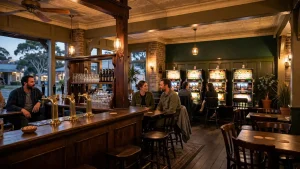
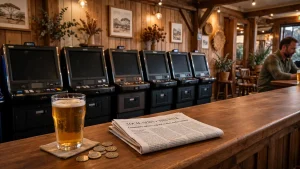
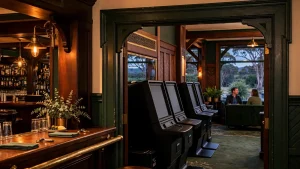
A request for pokies open now sounds simple. In practice, it asks for a fact that changes with the venue, the day and the hour. A room that is open late on one occasion may not open early on another; a venue’s general trading hours may not match the hours when its gaming area is operating. Without a live confirmation from the venue, a directory entry or an old listing cannot settle whether play is available at that moment.
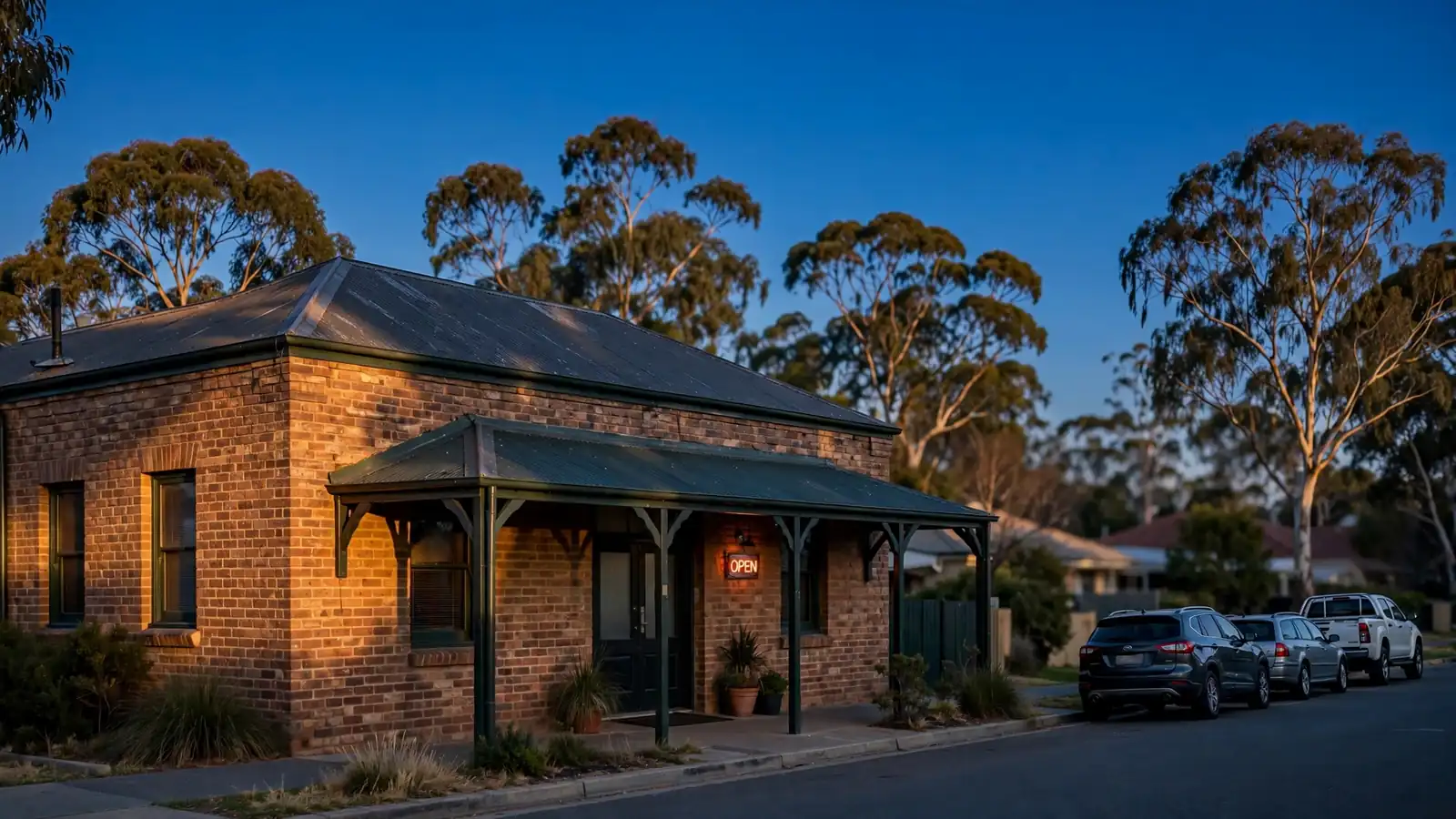
That distinction matters in Canberra, where a broad statement that pokies are open does not establish that any particular room is open now. Nor does a listing that says a venue is open necessarily confirm that its gaming area is available. Opening times can be revised, and published information can lag behind a change. “Open” is not a clock.
The same caution applies to early starts and late finishes. A search for pokies operating at six in the morning or seven in the morning expresses a precise need, but the wording alone cannot establish that a Canberra venue offers play at those hours. Late-night availability is no more certain. A general claim that Canberra pokies are open around the clock would turn an unverified possibility into a promise.
The useful distinction is between a venue’s stated hours and live operating status. A venue may publish its trading schedule, but the information still needs to be current and specific to the gaming area. A search result can point towards a place; it cannot reliably report what is happening inside it at this minute. When timing is the deciding factor, direct confirmation from the venue is more dependable than an undated listing.
There is also a human detail behind the clock. A staffed gaming room is not simply a collection of machines switched on for a fixed span. The people working there, the services available and the arrangements for responding to a patron in difficulty are part of the practical meaning of “open”. That does not make staffing a substitute for checking hours. It does explain why operating status is a venue matter rather than a feature that can be inferred from the word “pokies”.
A reported change to venue safeguards makes this point more concrete. Region Riverina reported that, from 1 July, venues with more than 20 gaming machines would need a dedicated responsible gambling officer (RGO) on duty while those machines operate. The report also described a one-month grace period for venues to remove signage and bring in RGOs, alongside a requirement for a gambling incident register. That register is intended to record occurrences such as behaviour indicating that a patron may be at risk of, or affected by, gambling harm.
Those details concern the operation of venues, not a live timetable for Canberra. They should not be mistaken for confirmation that a specific room is open, or for a directory of local venues. Their relevance to an opening-hours question is narrower: operating machines involve responsibilities as well as availability. A clock on a listing tells only part of the story.
The language of “open now” also compresses several different questions into one. Is the venue trading? Is its gaming area open? Are machines operating? Is the information current? Each has a different answer, and a single search result may not address all of them. The more exact the intended time, the less useful a broad statement becomes.
For that reason, opening information should be treated as time-sensitive rather than permanent. A venue’s own current notice or direct confirmation can establish what its published schedule says; only the venue can confirm whether circumstances have changed at the time of arrival. That is a practical distinction, not a claim that every venue updates its information in the same way. The point is simply that hours printed somewhere are not proof of present availability.
The phrase “pokies open in Canberra” can therefore mean two things: a general request to find somewhere to play, or a request for a place that is operating at a particular moment. The second needs more than a broad listing. “Open early” and “open late” are also relative descriptions unless attached to a verified schedule. Without that schedule, neither phrase should be treated as a dependable answer.
There is a similar temptation to read a venue’s availability as evidence about the machines themselves. It is not. Whether a room is open says nothing about a machine’s return settings or the outcome of a future spin. Those are separate questions, and a door being unlocked cannot answer them. The clock is a clock.
A careful account of Canberra opening hours should therefore avoid the theatrical certainty common to directory language. “Open now” is meaningful only when the information is current, the specific gaming area is covered, and the time in question is clear. Otherwise, it is a label that may have outlived the fact it was meant to describe.
For anyone comparing opening information, the sensible order is modest: identify the venue, check the current hours for the relevant area, then confirm directly if timing is important. That process does not guarantee that circumstances will remain unchanged. It does keep an old listing from being mistaken for a live report.
Canberra’s hours cannot be reduced to a promise that pokies are available at any hour. A venue may have its own schedule, and that schedule may not answer whether machines are operating at the instant someone asks. The RGO requirement reported for larger venues reinforces that operation has a staffed, accountable dimension; it does not turn a general search result into confirmation. Availability belongs to the venue, and the present tense belongs to the present.
For Canberra readers exploring online pokies in 2026, this shortlist offers a quick reference to the details available for each operator. Use the stated licensing, deposit and payout information to see what is disclosed before deciding where to play.
SkyCrown
SkyCrown lists a Tobique Gaming Commission licence and a minimum deposit of A$30. Its stated payout times are around 10–15 minutes for crypto and 1–5 days for fiat.
JustCasino
JustCasino lists a Curacao Gaming Control Board licence, giving readers a specific licensing detail to consider.
MrPacho
MrPacho lists a minimum deposit of A$30. Its stated payout times are 30–120 minutes for crypto and 24–72 hours for fiat.
LevelUp Casino
LevelUp Casino lists a Curacao eGaming OGL/2023/174/0082 licence held by Dama N.V. Its minimum deposit is A$15.
Lucky Dreams
Lucky Dreams lists a Curacao licence and a minimum deposit of A$20 when using POLi.
House of Pokies
House of Pokies lists an international iGaming licence, though the jurisdiction is not named in the available information. PayID payouts are stated as taking 1–24 hours, and the PayID minimum deposit is A$10.
Uptown Pokies
Uptown Pokies lists a Curacao licence and has been operating since 2017. Its minimum deposit is A$20.
WinSpirit Casino
WinSpirit Casino lists a Curacao eGaming OGL/2024/923/0383 licence held by Antillephone N.V. Its minimum deposit is A$30.
Roby Casino
Roby Casino lists a Curacao eGaming licence, with Roby Games Ltd named in connection with it.
Vegaz Casino
Vegaz Casino lists a Curacao OGL/2024/1335/0780 licence. Its stated minimum deposit is EUR 20.
“Best-paying” sounds like a simple comparison: find the pokie with the highest return and expect it to give more back. The difficulty is that a return figure is not a forecast for an evening’s play. It describes a setting attached to a game, not a sum that a particular player is due to collect. A short run can end far above or below any theoretical return. The arithmetic has no appointment to keep.
There is another complication before any comparison begins. A specialist review reports that some game providers let casinos choose among different return-to-player (RTP) settings for the same pokie. If that applies, the game’s title alone cannot establish its return: the version in one place may be configured differently from the version elsewhere. A ranking based only on names would leave out the setting that makes the comparison meaningful.
That distinction matters in Canberra as much as anywhere else. A claim that a particular pokie is the best-paying would need to identify the relevant version and its RTP setting, rather than relying on a familiar title or a confident label. Without those details, the ranking is not a measurement. It is a sales-shaped sentence.
Even a stated RTP does not predict the result of an individual session. Each spin is generated through a random number generator, and its result is separate from the spin before it. A sequence of losses does not make a win “due”; a win does not make another win more likely. The machine does not remember the previous player, the previous hour or the previous spin. Randomness is less dramatic than folklore, but considerably less obliging.
The word “return” can encourage a mistaken picture: money goes in, a known portion comes back, and the balance is merely a matter of waiting. That is not how a single session behaves. A return figure, where one is given, is a statistical description of a configured game, not a personal payout schedule. It cannot say how long a session will last, whether a particular spin will win, or what amount will be left when play stops.
That makes “best pokies in Canberra” an uncertain proposition when “best” is meant to mean highest-paying. A game’s popularity, appearance or reputation cannot substitute for its RTP setting. Nor does the same title necessarily settle the matter across different casinos, given that some providers permit settings to vary. Without a like-for-like comparison of the actual settings, there is no sound basis for declaring one pokie the winner.
This also explains why lists of supposedly generous machines can be less informative than they appear. A ranking can present an exact order while hiding the conditions needed to support it. If the underlying setting is unknown, the order may compare labels rather than returns. And if a return figure is available, it still cannot turn randomness into certainty. Precision in a table is not the same thing as precision in the claim.
For someone weighing up pokies in Canberra, the useful distinction is between a game’s configured return and the outcome of play. The first may be a property of a particular version; the second remains uncertain spin by spin. Confusing them makes an abstract percentage sound like a promise. It is not.
The phrase “best-paying” can therefore describe a comparison only when the relevant RTP settings are known and compared on equal terms. It cannot identify a guaranteed winner, and it cannot tell anyone what a session will pay. A pokie may have a stated return setting; the next spin remains random. That is the limit.
A pokie in a Canberra venue and a pokie offered through a website may look like versions of the same pastime. Legally, they sit on opposite sides of a substantial divide. Local venue play takes place under rules for physical gaming machines; real-money online casino games are covered by the federal Interactive Gambling Act 2001.
That Act prohibits companies from providing online pokies for real money to people in Australia unless they hold a domestic licence. None has been issued, and Australia has no licensed online casino. A site describing itself as a Canberra casino online, or presenting online pokies as a local service, does not change that position. The location in a page title is not a licence.
The law is directed at operators, rather than making an individual player’s act of playing on an offshore site a crime. Australians may be able to access offshore sites that accept them, but that possibility is not the same as domestic approval or protection. ACMA, the Australian Communications and Media Authority, enforces the Act and blocks access to illegal offshore gambling sites; internet service providers must comply with its blocklist. Access can therefore be interrupted, and an offshore operator remains outside the protections that come with a domestic online-casino licence—which, in Australia, does not exist.
That distinction matters most when something goes wrong. If an offshore casino refuses to pay winnings, an Australian player has no legal recourse in Australia against it. A displayed balance is not the same as money safely within reach, and a promise on a screen cannot supply a local regulator or court with authority over an offshore business. The risk is not confined to whether a game loads or a payment is accepted. It concerns what happens when the operator controls the account, the records and the decision to release funds.
Identity checks do not remove that risk. Before a first withdrawal, documents establishing identity and address should be verified; an operator’s request for paperwork is not evidence that the service is licensed or that a payout is protected. Nor does a welcome offer, including one framed as a no-deposit bonus, alter the legal status of real-money online pokies offered to people in Australia. A promotion is a sales device, not a jurisdiction.
The same caution applies to limits. A website may display options described as high-limit or maximum-bet play, but those labels say nothing about Australian authorisation, the operator’s ability to honour a withdrawal, or the player’s local remedies. Online access also does not turn a search for pokies near central Canberra into a physical venue listing. These are different arrangements, with different risks.
BetStop is sometimes mistaken for a universal barrier. It applies to Australian-licensed gambling operators; it does not bind offshore casinos. Because no Australian-licensed online casino exists, BetStop should not be treated as a way to block or control an offshore casino account. Its limits are important. A tool with a boundary cannot protect beyond it.
In Canberra, the online version of a familiar game therefore belongs to a different legal landscape from the pokie on a venue floor. The operator’s location, the wording of its offer and the apparent ease of access do not create Australian oversight. The gap is plain.
Airport and CBD searches begin with a practical idea: reduce a large city to a manageable area. “Near” does the work, but it is elastic. It may mean a short walk, a brief drive or simply somewhere associated with the same part of Canberra. Without a confirmed address and route, the word cannot settle the distance.
The airport is a useful landmark, not proof that a pokie venue is inside the terminal or on airport property. A search for play near Canberra Airport might be about the surrounding area, a stop before a flight or a place to visit after arrival. Those are different plans, even when they share a map pin. The phrase “at the airport” makes a stronger claim than “near the airport”; the wording alone cannot establish that claim.
The same distinction applies to the CBD. Central Canberra is a broad organising label, not a guarantee that a venue sits within a particular walking radius. The city’s formal centre and a person’s sense of “close by” need not match. A result grouped under a CBD label may still require checking its precise address and the route from the intended starting point.
North Canberra is similarly expansive. It names a part of the city rather than a single neighbourhood, and a result bearing that label does not reveal how convenient it is for a particular journey. Proximity depends on where the trip begins, how it will be made and what counts as close. Maps can answer the route question once an address is known; a broad location phrase cannot answer it on its own.
The wording “Canberra, Vic” deserves particular care. “Vic” points to Victoria, while Canberra is associated with the Australian Capital Territory; a location phrase that combines them may reflect an imprecise search, an address elsewhere or a mistaken geographic assumption. It is not enough to identify a venue. The place attached to a result matters more than the keywords that produced it.
That is the limit of geography as a recommendation. Airport, central-city and northern-area labels can help organise a search, but they do not verify a business, its facilities or whether it suits a particular journey. A clear address is the essential starting point; the map then has something concrete to measure.
There is also a boundary that no map can soften. In Australia, gambling is restricted to adults aged 18 and over, including play on online pokies. Location may explain where a search is aimed. It does not change that threshold.
A venue’s name or address says little about how its gaming area is managed. For Canberra, a list of places cannot substitute for information about the safeguards operating inside them—and a label such as “best” does not establish that a venue has stronger protections or more attentive staff.
One reported change concerns larger venues. According to a report by regionriverina.com.au, from 1 July a venue operating more than 20 gaming machines is required to have a dedicated responsible gambling officer (RGO) on duty while those machines are running. The threshold matters: the obligation described is tied to the size of the gaming-machine operation, not simply to whether a venue has pokies.
An RGO gives a named role to the work of noticing and responding to signs of gambling harm. That does not make the officer a guarantee against harm, nor does it turn the role into a ranking measure for venues. It does make staffing part of the account of how a larger gaming floor is expected to operate. A room full of machines is not, in this view, merely an amenity; it brings responsibilities with it.
From 1 July, venues with more than 20 gaming machines must have a dedicated RGO on duty while machines operate. This includes a requirement to maintain a gambling incident register to record behaviour indicating a patron may be at risk of gambling harm.
The same report describes a one-month transition period for venues to remove signage and introduce responsible gambling officers. That is a practical adjustment, not evidence that every Canberra venue has the same number of machines, follows the same timetable, or has already completed the change. The distinction is worth keeping: a rule for qualifying venues does not identify which venues qualify.
The report also describes a gambling incident register that venues will be required to maintain. It is intended to record occurrences that may indicate a patron is at risk of gambling harm or is already affected by it. A register makes incidents legible to the venue rather than leaving them as isolated encounters: an observable change in behaviour can become something staff record and respond to. Paperwork is not care by itself. Still, the record creates a trace where silence might otherwise be convenient.
For anyone weighing Canberra venues, these obligations offer a more grounded frame than an unsupported claim about which place is best. They concern staffing and the recording of harmful incidents, not the quality of a gaming-machine selection or the likelihood of a win. A responsible gambling officer on duty is a safeguard within the venue’s operation, not a promise about what any individual will experience.
The useful distinction is between a venue’s advertised attractions and its operating duties. The former may be designed to draw attention; the latter define some of the work required around gaming machines. Neither a postcode nor a polished description settles how those duties are being carried out. The rules are specific; the praise is not.
Putting Crown, Canberra and pokies together in a phrase does not establish that a Crown venue operates in Canberra, or that such a venue has a pokies room. The words can point towards a hoped-for place, a mistaken association or an online product imagined in the shape of a familiar casino brand. Those are different things, even when they arrive in the same sentence.
A venue and an online casino belong to separate questions. A venue search concerns a physical place and what it offers. An online-casino search concerns gambling services supplied over the internet. The word “Crown” does not settle which is meant, and it cannot turn a location into evidence of a venue or its machines.
That distinction matters particularly in Australia, where there is no locally licensed online casino. The Interactive Gambling Act 2001 governs the provision of online gambling services, and the Australian Communications and Media Authority (ACMA) is the primary domestic regulator responsible for enforcing that law. A brand name, a polished website or a page dressed to resemble a local casino does not alter the legal framework.
ACMA’s role is regulatory, not promotional: it enforces the law rather than certifying that a phrase found online describes a Canberra gaming floor. Search results can join place names and commercial names with great confidence. Confidence is not proof.
The same caution applies to requests for a “best” pokies room or a maximum cash payout at a Canberra venue. Those phrases presume that a particular room or payout arrangement has already been identified. Without that identification, a ranking or a figure would only give uncertainty the costume of a fact. A payout limit, where one exists, belongs to the rules of a specific venue or service; it cannot be inferred from a name assembled beside “Canberra”.
There is a broader habit at work here. Casino language travels easily: a city becomes a destination, a brand becomes shorthand for a venue, and an online page can borrow the vocabulary of a building. The distinctions that regulation depends on are less portable. Australia has no licensed online casino, and ACMA’s authority concerns the law governing online gambling—not proof that every combination of casino words describes a real local place.
A name is not a map.
A club in central Canberra is not, by its name alone, evidence of a place with pokies. “Club” can describe a social institution, a dining room, a meeting place or a business; it does not settle what facilities are on site. Nor does a CBD address establish that machines are present. Those details belong to the individual venue, not to the category suggested by a name.
That distinction matters when a list appears to promise a simple answer. A collection of clubs near the centre may be useful as a map of places, but it cannot be treated as a verified directory of gaming-machine venues unless each entry is checked against reliable, current venue information. Even then, the word “best” adds a separate judgement: closeness to the centre, atmosphere and machine availability are not interchangeable measures.
The city-centre framing also changes the character of the question. A club is part of local civic life, not merely a container for a particular form of entertainment. Australian clubs have long combined social membership, food, sport and community activity; gaming may be one element, but it should not be assumed to define the institution. A search organised around pokies can flatten that history into a single feature.
For people concerned about gambling, the more useful distinction is between finding a venue and setting boundaries around play. Deposit limits can restrict funds placed into an account; loss limits can constrain losses; session time limits can put a boundary on time spent gambling. Self-exclusion offers a way to bar oneself from gambling in the relevant context. These are standard responsible-gambling tools, though their presence does not turn a venue search into a recommendation.
Self-exclusion is especially different from a casual preference. It is a deliberate restriction, and its practical reach depends on the gambling setting in which it is used. BetStop applies to Australian-licensed operators; it does not bind offshore sites. That boundary matters because a protective measure is only as broad as the system that recognises it.
Restrict the total funds placed into a gambling account.
Constrain the total amount of money that can be lost.
Put a boundary on the amount of time spent gambling.
A deliberate restriction to bar oneself from gambling in a specific context.
A central address can be verified as a location. A club’s facilities require venue-specific confirmation, and a ranking requires criteria beyond a postcode. The two questions are often bundled together; they should not be. The map is not the machine.
Parkes gives a Canberra-focused request a precise-looking address. That precision can be misleading. A place name narrows the subject of a search; it does not, by itself, establish which venues have pokies, whether a particular room is open, or what machines are available there. The name is a starting point, not a recommendation.
This distinction matters because local searches often compress several different needs into a few words. Someone may mean a venue in Parkes itself, a place nearby, or simply pokies somewhere in Canberra. Those are not interchangeable descriptions. A result that mentions the suburb does not necessarily answer the practical question, and a list assembled from names alone can give a false impression of certainty.
Place names carry a quiet authority. They make information feel close at hand, as though the map has already done the checking. But proximity and suitability are separate matters, and neither follows automatically from a label. Treating Parkes as proof of a particular gaming option would turn geography into evidence it cannot provide.
The same care applies to claims about who may gamble. Australia’s legal age for gambling is 18, including for online pokies. That threshold is clear; a place name is not an exception to it. The rule concerns eligibility, not whether any particular venue offers gaming machines.
There is a small irony in the way a short location phrase can appear more informative than it is. It identifies a point of interest, but leaves the substance unresolved: what kind of place is meant, and whether the information attached to it is current. A map can orient a person. It cannot certify a venue.
For Parkes, then, the useful distinction is modest but important: the suburb’s name may help describe where someone is looking, while saying nothing on its own about the pokies there. No recommendation can be built from the place name alone.
Cashless play and a search that joins Newcastle to Canberra point in different directions. The first is about how money might move in a gambling setting; the second may simply combine two places in one phrase. Neither, by itself, establishes that a Canberra venue has cashless pokies, or identifies a venue in either city.
PayID is not a type of pokie or a venue payment feature. It is a way to address a bank transfer using an email address, mobile number or Australian Business Number rather than entering account details. The system operates through the New Payments Platform (NPP), which major Australian banks support; transfers are protected with end-to-end encryption. That describes the transfer infrastructure, not what any particular venue accepts.
Nor does a payment label say anything about a game’s fairness, its return setting or the legitimacy of a gambling service. Those are separate matters. A payment method is a narrow piece of information, not a certificate.
The Newcastle wording deserves the same restraint. It may reflect a comparison, a travel plan or two place names carried into one search. It does not prove that a Newcastle venue is relevant to a Canberra visit, or that any particular club offers pokies. Geography can be joined with a conjunction; evidence does not follow automatically.
There is a familiar modern faith in the interface: if a payment option appears, the surrounding service must have passed some larger test. But payment rails move money. They do not adjudicate the claims made by the business receiving it. Cashless convenience and venue facts remain separate questions. A tidy distinction.
From 1 July, venues with more than 20 gaming machines must have a responsible gambling officer on duty while the machines are operating. They must also keep a gambling incident register; venues have a one-month grace period to remove signage and introduce the officers.
Australian players can legally play on offshore sites that accept them, but offering real-money online pokies to Australians without a domestic licence is illegal, and no Australian online casino licences have been issued. Players have no legal recourse in Australia if an offshore casino refuses to pay their winnings.
Yes. PayID is treated like any other qualifying deposit method at the recommended sites.
Check the wagering requirement and any cash-out cap before accepting an offer. For example, a $500 bonus with 40x wagering requires $20,000 in bets; if the requirement applies to a $500 deposit plus a $500 bonus at 35x, it requires $35,000 in bets.
Yes. Some game providers let casinos choose among multiple RTP settings for the same game, so its return percentage can differ between casinos.