Visa use at an online casino depends on the operator, and card acceptance alone does not establish deposit or withdrawal options.
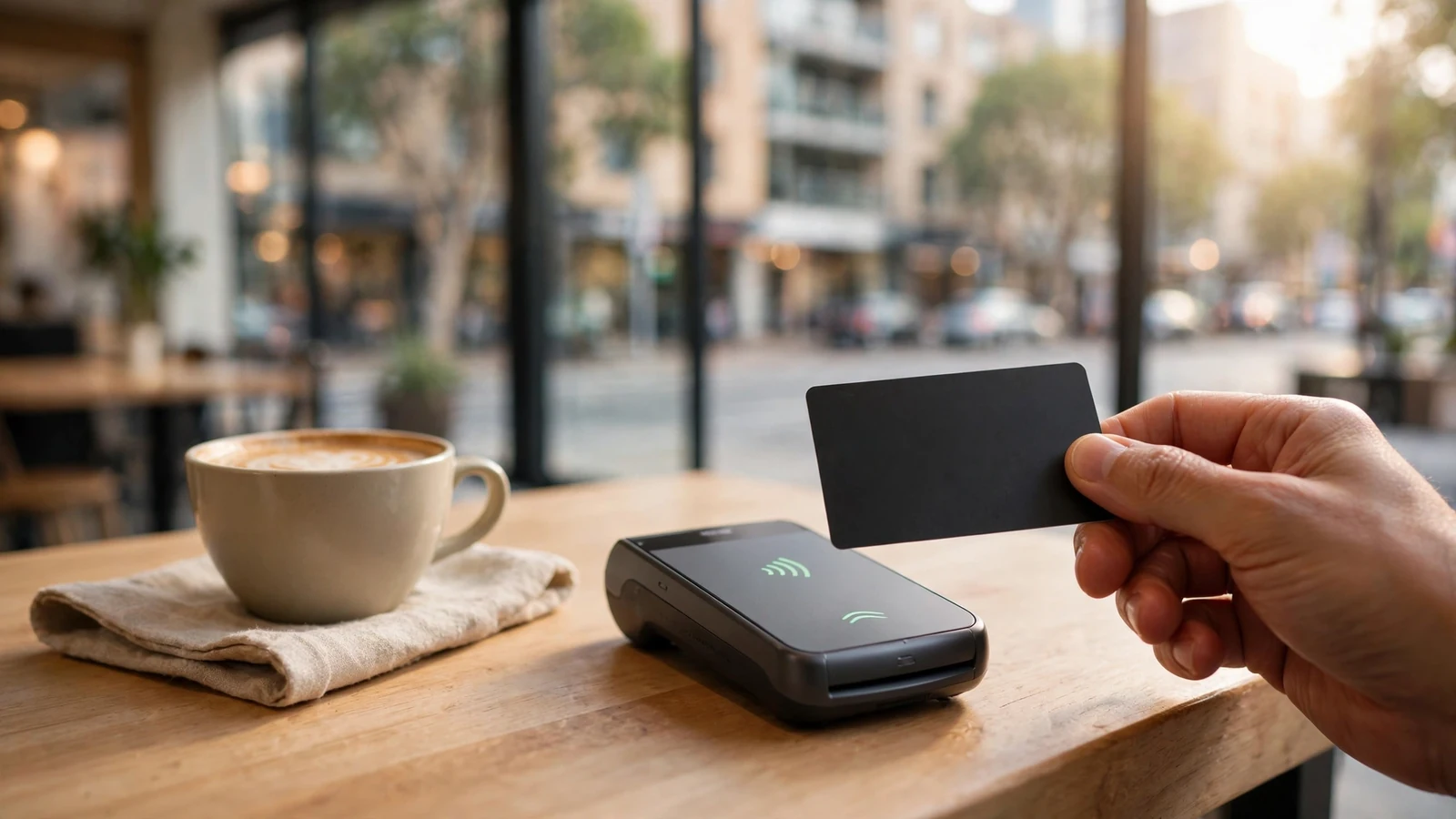
In Australia, a payment card is part of ordinary public life: a quick tap at a café, a supermarket checkout or a station barrier rarely attracts attention. Contactless credit and debit cards are accepted almost everywhere in the country. That familiarity gives Visa a recognisable place in the payment landscape, but it does not tell anyone what a particular online service will accept.
The distinction matters because a familiar card brand can feel like a universal key. It is not. Everyday acceptance reflects the habits and infrastructure of shops and service providers; an online operator sets its own payment options. A Visa logo in a wallet, then, says little about whether a specific site lists Visa or what transactions it permits.
Australian consumers are also accustomed to moving between payment forms. Cards sit alongside mobile wallets such as Apple Pay and Google Pay, while services connected to bank accounts, including PayPal, are part of the same practical mix. The choice is often shaped by the setting: tapping a phone at a counter can be as unremarkable as tapping a card. Convenience has become a habit, not a declaration of loyalty to one system.
Choosing a casino that accepts Visa in Australia involves checking the available operator details before deciding where to play. This list offers a concise reference to the information provided for each casino.
SkyCrown
SkyCrown lists a minimum deposit of A$30. Its stated payout times are around 10–15 minutes for crypto and 1–5 days for fiat.
JustCasino
JustCasino lists the Curacao Gaming Control Board as its licensing authority.
MrPacho
MrPacho lists a minimum deposit of A$30. Its stated payout times are 30–120 minutes for crypto and 24–72 hours for fiat.
LevelUp Casino
LevelUp Casino lists a minimum deposit of A$15 and a Curacao eGaming OGL/2023/174/0082 licence held by Dama N.V.
Lucky Dreams
Lucky Dreams lists a minimum deposit of A$20 for POLi and identifies its licence as Curacao.
House of Pokies
House of Pokies lists PayID payouts of 1–24 hours and a minimum PayID deposit of A$10, with A$30 as the stated general minimum. Its source describes the licence as international iGaming but does not name the jurisdiction.
Uptown Pokies
Uptown Pokies lists a minimum deposit of A$20 and identifies its licence as Curacao; it has been operating since 2017.
WinSpirit Casino
WinSpirit Casino lists a minimum deposit of A$30 and a Curacao eGaming OGL/2024/923/0383 licence held by Antillephone N.V.
Roby Casino
Roby Casino lists a Curacao eGaming licence held by Roby Games Ltd.
Vegaz Casino
Vegaz Casino lists a minimum deposit of EUR 20 and a Curacao OGL/2024/1335/0780 licence.
That flexibility helps explain why Visa is a familiar category when people think about online payments. A specialist casino review has reported that Visa may be accepted more broadly than American Express at Australian online casinos. That is a limited comparison, not a promise about any individual operator, and the position can change. Familiarity in daily commerce should not be mistaken for universal availability elsewhere.
There is also a difference between recognising a payment brand and assuming that every use of it is permitted. Card use in everyday retail does not settle the rules for gambling transactions, nor does it establish the payment choices of any online service. Those are separate questions, shaped by the provider and by the boundaries applying to the service itself.
In short, Visa belongs to a payment culture built around quick, ordinary choices among cards, phones and bank-linked services. Its familiarity is real. Its reach is not unlimited.
A specialist review has reported that Visa may be accepted more broadly by Australian-facing online casinos than American Express. That is a comparative observation, not a directory of working payment options. It does not establish that a particular casino takes Visa, whether it accepts credit or debit cards, or whether a payment would be permitted by the card issuer.
The distinction matters because “Visa accepted” can sound like a stable property of a business, like its name or address. In practice, payment availability is a condition attached to a specific operator and transaction. A broad comparison between card brands cannot settle the details for any one site. Nor does it tell whether the cashier displays Visa for Australian customers, whether a displayed option applies to deposits alone, or whether the card issuer will approve the charge.
So a claim that Visa is more widely accepted than Amex should be read narrowly: it suggests a relative difference, as described by a specialist review, but not universal access. “More broadly” is not “everywhere”. It is also not a reliable basis for naming the best casino that accepts Visa. A ranking would require current, operator-specific evidence and a clear definition of what acceptance means. Neither follows from the comparative observation.
There is a further complication in the Australian setting. Under the Interactive Gambling Act 2001, operators may not provide real-money online casino games to people in Australia. Offshore sites may still be encountered, but their availability does not make them lawful local services. Australian consumer law does not protect players who use offshore casinos. A payment logo cannot repair that gap.
This leaves a limited answer to the practical question of whether Australian casino sites take Visa: a specialist review has described Visa as potentially more widely accepted than Amex, but that does not verify acceptance at any particular site. It cannot support a list of casinos that accept Visa, or a promise that Visa debit will work. The difference between a general tendency and an individual cashier is the difference between a clue and a usable fact.
Payment branding has a tidy appearance. The underlying arrangements do not. A card network, a casino cashier and a card issuer are separate parts of the payment chain, and a statement about one does not settle what the others will allow. That is why broad acceptance claims deserve careful handling, especially where a familiar payment method might make an offshore gambling service seem more ordinary than its legal and consumer-protection position warrants.
No named operator can be confirmed on this basis. The narrower statement is the more honest one.
A Visa card can make a search for online pokies sound like a question of payment compatibility. In Australia, that framing misses the more consequential distinction: whether an operator may offer the service at all. A familiar card brand does not alter the legal status of an online casino, and a payment option cannot turn a prohibited service into a lawful one.
The Interactive Gambling Act 2001 prohibits operators from providing real-money online casino games to people in Australia. That category includes pokies as well as casino table games. The law is directed at the provider, not written as a general criminal offence for a person who uses an offshore site. Those are separate points, and collapsing them into a simple claim that “online casinos are illegal” can obscure who the law addresses.
The distinction is not an endorsement. A service being accessible from a browser does not mean it is authorised to serve Australian residents, nor does the absence of an explicit player offence make the arrangement safe or protected. Australian consumer law does not protect people who use offshore casinos. If a dispute arises over an account, a payment, or winnings, the protections available for an ordinary domestic purchase may not apply. The screen can look familiar. The legal relationship is not.
The Australian Communications and Media Authority, or ACMA, is responsible for enforcing the Interactive Gambling Act. Its role places online casino services within a national regulatory boundary rather than a simple marketplace of competing websites. Offshore operators may present themselves as available to Australians, but their presence on the internet does not establish that they are permitted to provide real-money casino games here. Enforcement and access restrictions are part of that boundary; they are not a consumer rating system.
This is why the phrase “Australian online casino” can carry more certainty than it deserves. It may describe the intended audience, the currency shown, or the wording used in promotional material. None of those details proves that an operator is Australian, locally authorised, or entitled to offer casino games to people physically in Australia. Geography in a web address is not a licence. Familiarity is not permission.
Visa adds another layer of apparent normality. It is a payment brand commonly encountered in everyday Australian life, so its name can make an offshore gambling service seem like an ordinary extension of retail payments. But payment infrastructure and gambling law answer different questions. A Visa logo, a card field, or a reference to mobile access does not establish that an operator may legally provide online casino games in Australia. Nor does it establish that the transaction will be accepted or that the service is covered by Australian consumer protections.
That gap matters because payment language often presents a service as a sequence of practical choices: select a method, enter details, proceed. The legal question comes before that sequence. If an operator is prohibited from supplying real-money casino games to people in Australia, the availability of a payment route is not a meaningful sign of legitimacy. A cashier is not a regulator.
The word “offshore” can also sound reassuringly technical, as though it merely describes a business address. In this setting it marks a material difference in recourse. A business operating beyond Australia’s consumer-protection framework does not become answerable to that framework simply because an Australian customer can reach its site. Where a dispute crosses borders, the absence of local consumer protection is not a footnote; it is part of the practical risk.
There is no contradiction between saying that the Act targets operators and saying that offshore use leaves players without Australian consumer-law protection. The first concerns the prohibition on supplying the service. The second concerns what happens when a customer seeks help or redress. A person may not be explicitly criminalised by the Act for using an offshore site, yet still face limited practical remedies if the operator fails to honour its own terms. A narrow legal distinction is not a safety net.
The same caution applies to claims that a site is “for Australians” because it accepts Australian currency, displays local-facing language, or lists Visa among possible payment methods. Those details describe presentation or a transaction feature, not legal status. They cannot establish that an online casino is permitted to offer real-money games to people in Australia. The boundary is set by law, not by the smoothness of a website.
So the phrase “pokies and Visa” joins two matters that should remain distinct. Visa concerns a payment brand; the Interactive Gambling Act concerns whether an operator may supply online casino games to Australians. For people in Australia, the second question cannot be answered by the first. The logo does not settle it.
A cashier is the point at which a gambling service presents its payment choices. It is also where the neat idea of a deposit as a simple card transaction meets the less theatrical business of identity checks. A Visa logo, where displayed, describes a payment option; it does not settle whether an account is ready to transact, or what conditions apply to that account.
Online casinos commonly require customers to complete identity and customer-due-diligence checks before handling financial transactions. Known as Know Your Customer, or KYC, this assessment is a gate in the process rather than a decorative formality. Selecting a payment method and satisfying an operator’s checks are separate matters. A person might see a method listed in a cashier without that alone establishing that a transaction can proceed.
This distinction matters because payment language can make the cashier look like a menu of dependable outcomes. It is not. A displayed card category does not, by itself, establish acceptance for every customer or transaction. Nor does it explain the operator’s account checks. Those checks belong to the service’s own procedures, while a card’s appearance in a list says only that the method is presented there.
An identity and customer-due-diligence check that online casinos require customers to complete before handling financial transactions.
Visa is described as potentially more widely accepted than American Express at Australian online casinos in a specialist review. That is a qualified comparison, not a guarantee about any particular cashier, and it should not be read as an endorsement of offshore gambling. Acceptance can vary by operator and change over time. The payment label carries less certainty than its tidy branding suggests.
The same caution applies to a deposit amount attached to Visa. A figure in an operator’s terms would be relevant to that operator, but the presence of a small amount in a phrase or advertisement cannot establish that every cashier permits it. Amounts and conditions are not universal features of a card network. A Visa transaction is not governed by one shared casino deposit rule simply because the same card name appears across different services.
The cashier also compresses several separate decisions into one screen: which methods are shown, whether a customer has completed the required checks, and whether the operator will process the transaction. These stages can be mistaken for a single promise. They are not. A payment option is not proof that identity checks have been completed, and completing checks does not turn an offshore service into a lawful Australian casino.
That distinction has a particular weight in Australia. The law bars operators from providing real-money online casino games to people in the country. Offshore services do not become locally authorised merely because they display familiar payment branding. Australian consumer law does not protect people who use offshore casinos. The cashier can look ordinary; the legal position is not.
This is where the modern payment interface reveals its double nature. It borrows the language of everyday retail—cards, account details, a button to continue—and places it beside a service that sits outside the protections Australians may associate with domestic commerce. Familiarity is not jurisdiction. A recognisable card brand does not supply consumer protection, resolve a dispute, or change the status of the operator.
For a deposit-focused search, the meaningful distinction is therefore not simply between Visa and another method. It is between a payment choice shown on a screen and the wider conditions that govern an account and the service behind it. KYC checks are part of that distinction; legal status and consumer protection are another. None can be inferred from the card logo alone.
A cashier is a narrow window into an operator’s process, not a certificate of safety or permission. Its labels may suggest a straightforward transaction, but the customer assessment and the legal setting remain outside the neat little rectangle. The interface is tidy. The consequences are not.
A payment method belongs to two different worlds at once: the habits people have formed in everyday life, and the options a particular service chooses to support. In Australia, those worlds are easy to confuse. Cards, mobile wallets and bank-linked services are all familiar, but familiarity does not make them interchangeable—or establish that an online casino accepts any of them.
A card brand described by specialist reviews as potentially more widely accepted at Australian online casinos than American Express.
Services like Google Pay and Apple Pay that are common in Australian retail but have separate availability for gambling services.
Payment methods connected to bank accounts, such as PayPal, which Australians use as part of a flexible payment mix.
Visa sits within the card category. A specialist review has described Visa as more widely accepted at Australian online casinos than American Express, but that is a qualified comparison, not a rule for every operator. It says nothing by itself about a particular site, or whether a card can be used for every kind of payment. A familiar logo is not a universal passport.
Mobile wallets occupy a different place in the payment landscape. Google Pay and Apple Pay are available at almost all Australian retailers, making them ordinary ways to pay in daily life. Yet their broad presence in shops does not establish their availability for gambling services. A wallet can draw on a card or another funding source, but the casino’s own payment arrangements—and the rules governing the service—remain separate questions.
Then there are services linked to bank accounts, with PayPal a recognisable example. Australians are accustomed to moving among these services, cards and wallets rather than treating one method as the natural choice for every purchase. That flexibility is a feature of the wider payment culture, not evidence that every online platform offers the same menu.
The distinction matters because “payment option” can mean several things: a method people commonly use, one accepted by retailers, or one an operator displays in a cashier. Those categories overlap, but none guarantees the next. In particular, a mobile wallet’s everyday reach cannot be used to infer casino support, and a comparison between Visa and Amex cannot establish which payment methods a given service offers.
There is also a legal boundary that ordinary payment language can obscure. Under the Interactive Gambling Act 2001, operators cannot provide real-money online casino games to people in Australia. Payment categories do not alter that rule or turn an otherwise prohibited service into a lawful one. The consumer’s accustomed ability to tap a card or phone at a shop is not a guide to the status of online casino games.
Payment culture is broad; acceptance is specific. And legality is separate again.
“Paying by Visa” sounds like a simple description of a payment option. In practice, it can be read too broadly. A card brand being mentioned in general discussions of online gambling does not establish that a particular operator accepts that card, or that a payment would be permitted by the card issuer.
A specialist review has described Visa as potentially more widely accepted by Australian-facing online casinos than American Express. That is a qualified comparison, not a dependable rule for every operator. Payment arrangements can differ between sites and can change; a broad statement about relative acceptance cannot settle what appears in an individual cashier.
Nor does seeing Visa named somewhere establish that every Visa card will work. The payment route may depend on the operator’s current arrangements and the issuer’s handling of the transaction. Those are distinct decisions, despite the tidy appearance of a logo beside a payment label.
There is a further distinction between a payment option and a lawful service. Under the Interactive Gambling Act 2001, operators are prohibited from providing real-money online casino games to people physically located in Australia. The fact that a payment method is discussed or displayed does not change that boundary. Australian consumer law does not protect people who use offshore casinos.
The phrase “Visa casino payment method” therefore tells less than it may appear to. It can signal a general possibility, but it is not proof of acceptance by a named operator, nor evidence that an attempted transaction will go through. A brand is not a promise.
A Visa option for putting money into an account does not, by itself, mean that the same card can receive a withdrawal. Deposits and withdrawals are separate functions, and a payment method shown for one should not be read as confirmation of the other. There is no established general rule that an online casino can return winnings to Visa, or that it will do so within a particular time.
That distinction matters because a cashier can present payment choices without explaining every condition attached to a later payout. A withdrawal may be handled differently from a deposit, and the available methods can vary between operators. Without clear, operator-specific terms, claims about Visa withdrawal access remain unsubstantiated. The same applies to a promised processing window: a label such as “Visa withdrawal” says nothing on its own about when funds would arrive.
For Australian residents, there is a more fundamental boundary. The Interactive Gambling Act 2001 prohibits operators from providing real-money online casino games to people in Australia. Australian consumer law does not protect players who use offshore casinos. A payment feature should not be mistaken for evidence that a service is lawful, locally supervised or capable of delivering a withdrawal.
Searches for Visa withdrawals at online casinos, including pokies sites, often collapse several different questions into one: whether a payment method is listed, whether withdrawals to it are permitted, and how long processing takes. Those are not interchangeable claims. Nor does the general possibility of varied cashier options settle any of them for a particular operator.
The sensible reading is narrow: Visa’s presence in a payment menu cannot establish withdrawal availability or timing. A casino withdrawal to Visa is not a promise contained in the card brand itself. Unanswered, until terms say otherwise.
“Instant” is an appealing word in payment language because it turns a process into a moment. A Visa withdrawal, however, cannot be judged by that label alone. It does not establish when a payment would arrive, whether Visa withdrawals are available at a particular service, or what conditions might apply. A claim about speed needs to be tied to a specific payment route and its terms; the adjective by itself is not a timetable.
The distinction matters because a payment method and a payment outcome are not the same thing. Visa may be familiar in everyday Australian commerce, but that familiarity does not establish how an offshore gambling service would handle a withdrawal. Nor does an instant deposit imply an instant return of funds. Money going in and money coming out are different transactions, and a description of one should not be carried across to the other.
The word “pokies” brings a further complication. In Australia, the Interactive Gambling Act 2001 prohibits operators from providing real-money online casino games, including slots, poker and table games, to people in the country. Casino-style games such as roulette and blackjack fall within that prohibited category as well. The Australian Communications and Media Authority is responsible for enforcing the Act. An advertised promise of speed does not alter that legal boundary.
The law places the prohibition on operators; it does not explicitly make an individual player’s use of an offshore site a criminal offence. That distinction should not be mistaken for consumer protection. Australian consumer law does not protect people using offshore casinos, leaving little comfort in a payment claim that sounds precise but says nothing about the conditions behind it. A polished promise is still only a promise.
There is also the ordinary matter of identity checks. Online casinos typically require customers to complete a Know Your Customer assessment before financial transactions. Such an assessment can form part of the process around payments, so “instant” should not be read as meaning that every account is ready for a transaction at once. The term does not describe the status of an account or settle what checks may be required.
Searches for instant Visa withdrawals, including those attached to real-money pokies or a no-deposit offer, combine several separate ideas: a game category, a payment method, a promotional condition and a speed claim. None automatically proves the others. A no-deposit phrase does not itself demonstrate that a withdrawal is available, and naming Visa does not establish that Visa is the route used to send funds back. Speed language cannot fill those gaps.
The broader habit of treating payment words as promises is understandable. Cards are visible, familiar objects; the machinery behind a transfer is not. Yet “instant” is often the neatest word in a sentence and the least informative one. Without clear terms for the particular service and transaction, it should not be mistaken for evidence of immediate access to winnings.
Fast-sounding language. Not a clock.
A Visa payment and a casino bonus are separate matters. A card logo, where displayed, says something about a payment option; it does not establish that a promotion is available, that a particular deposit qualifies, or that bonus conditions change. Those terms belong to the promotion itself, not to the card network.
The distinction matters because promotional language can make two unrelated promises look like one. A casino bonus described alongside Visa may create the impression that paying by Visa unlocks an offer. That cannot be assumed from the payment method alone. Nor does the presence of a bonus claim establish that an online casino may lawfully make that offer to people in Australia.
Australian law sets a sharper boundary. The Interactive Gambling Act 2001 bars operators from providing online casino games to people in Australia. The law does not, however, expressly make an individual player’s use of an offshore site a criminal offence. That difference does not turn an offshore promotion into a locally authorised one, or give the player the protections available under Australian consumer law. A legal gap is not a consumer guarantee.
Advertising is part of that boundary, not a decorative footnote. A bonus attached to real-money online casino play remains promotional material for a service operators are not permitted to provide to Australians. Visa does not alter that status. Card acceptance, promotional eligibility and legal permission are three different claims; blending them may make the offer sound simpler than it is. A payment method is not a licence, and a bonus is not evidence of one.
Visa and American Express may look like neighbouring choices in a cashier, but their reported acceptance is not identical. A specialist review has described Visa as potentially more widely accepted by Australian online casinos than American Express. That is a cautious comparison, not a count of operators or a promise that either card can be used at a particular service. Payment menus change, and a familiar logo does not settle what a transaction can actually do.
The distinction matters because card acceptance is often treated as a single yes-or-no fact. In practice, several separate questions sit behind it: whether a casino lists a card for deposits, whether the issuer permits the transaction, and whether that same card can receive a withdrawal. A “yes” to one does not answer the others. Nor does a wider reported footprint for Visa establish that a specific Visa payment will be accepted.
American Express illustrates the gaps clearly. A specialist review has reported that some online casinos do not accept Amex. The same kind of source has noted that some casinos may not allow winnings to be withdrawn to Amex, or may attach an extra withdrawal fee. These are reports about variable operator policies, not universal rules. They should not be turned into a fixed ranking of cards or a claim about every casino.
The comparison, then, is asymmetrical. The reported observation about Visa concerns relative breadth of acceptance; the Amex observations include both possible non-acceptance and possible restrictions on withdrawals. Neither establishes a reliable measure of the current market. A cashier may display a method while its terms limit its use, and a payment choice available for one part of an account may not be available for another. The small print does the separating.
There is also a boundary that card comparisons cannot erase. Under the Interactive Gambling Act 2001, operators must not provide real-money online casino games to people in Australia. The prohibition covers casino-style games such as poker, blackjack, roulette and pokies. It is therefore misleading to present a “best” Visa casino, or to treat card acceptance as a recommendation. A payment method does not make an otherwise prohibited service lawful.
The law’s focus is on operators, rather than making the player liable for using an offshore site. That distinction should not be mistaken for protection. Australian consumer law does not protect people who use offshore casinos, and Australian authorities actively enforce restrictions on those services. A payment dispute or a withdrawal restriction is not made safer merely because the card brand is recognisable.
Visa and Amex consequently tell different, limited stories. A specialist review’s comparison suggests Visa may have broader acceptance, while the same type of reporting identifies possible Amex exclusions and withdrawal conditions. Neither comparison proves that a casino is accessible, lawful, or able to return funds through a particular card. The logo is not the contract.
For a sober comparison, acceptance and withdrawal eligibility have to remain separate categories. Amex may be absent from some cashiers, and a casino that accepts it for deposits may still restrict withdrawals or charge a fee. Visa’s comparatively wider reported acceptance does not establish those same terms for Visa, nor does it establish that withdrawals are available to it. A reader cannot infer the destination of winnings from the presence of a deposit option.
The language of payment choice makes the market sound tidy: one card is “accepted”, another is not. The underlying rules are less tidy, and the Australian legal boundary is less negotiable still. The comparison can describe what a specialist review has reported, but it cannot turn either card into a safe route into prohibited online casino gambling.
Jackpot City Casino, Spin Palace, Ruby Fortune, Ignition Casino, Joe Fortune and PlayAmo are listed as operators supporting Amex deposits for Australian players. Availability can vary, so check the cashier before depositing.
Yes. Deposit and withdrawal limits are set by each casino and can vary; check the limits shown in its cashier. Amex limits are often higher than those offered for Mastercard or Visa.
Yes, at casinos that accept American Express, but gift cards can be used for deposits only.
Amex deposits are processed instantly. Withdrawals can take up to five days to clear.
Amex or your Australian bank may block a gambling payment to a particular website. Check with your card issuer whether the transaction was blocked and review the casino’s available payment options.
Yes, some Australian-facing online casinos accept Amex deposits, though not all do and withdrawals to Amex may not be available. The Interactive Gambling Act 2001 prohibits operators from offering online casino games to Australian residents.