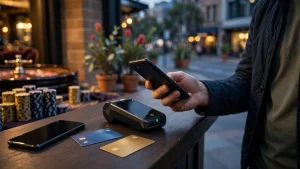
The Interactive Gambling Act restricts operators from providing real-money online casino games to people in Australia, while not explicitly criminalising players.

Australia’s legal boundary around online casino games is drawn around the provider, not simply around the person holding an account. Under the Interactive Gambling Act 2001, operators must not provide real-money online casino games to people in Australia. The restriction covers casino-style play such as poker and table games, as well as pokies. It is not a question of whether a particular game is familiar, whether an account is easy to open, or whether a service is operated from somewhere else. The law concerns the service being offered to people here.
That distinction matters because online gambling is often presented as a matter of personal choice: a customer finds a site, chooses a game and decides whether to take part. In the Australian legal framework, however, the central restriction is on businesses providing the prohibited service. The Interactive Gambling Act does not explicitly criminalise players for using offshore casino sites. That does not turn those sites into lawful providers in Australia, nor does it make their activity a locally regulated consumer service.
For Australian players considering casino sites that accept Osko, this overview helps focus on the details available for each operator. Check the payment options and terms on a casino’s site before depositing, as the information provided here does not confirm Osko availability.
SkyCrown
SkyCrown lists a Tobique Gaming Commission licence and a minimum deposit of A$30. Its stated payout times are around 10–15 minutes for crypto and 1–5 days for fiat.
JustCasino
JustCasino is listed with a Curacao Gaming Control Board licence. No payment or deposit details are provided here.
MrPacho
MrPacho lists crypto payouts at 30–120 minutes and fiat payouts at 24–72 hours. Its minimum deposit is A$30.
LevelUp Casino
LevelUp Casino is listed under Curacao eGaming licence OGL/2023/174/0082, held by Dama N.V. The minimum deposit is A$15.
Lucky Dreams
Lucky Dreams is listed with a Curacao licence and a minimum POLi deposit of A$20.
House of Pokies
House of Pokies has an international iGaming licence, though the jurisdiction is not named in the available information. PayID payouts are listed at 1–24 hours; the minimum deposit is A$30, or A$10 when using PayID.
Uptown Pokies
Uptown Pokies is listed with a Curacao licence and has been operating since 2017. Its minimum deposit is A$20.
WinSpirit Casino
WinSpirit Casino is listed under Curacao eGaming licence OGL/2024/923/0383, held by Antillephone N.V. Its minimum deposit is A$30.
Roby Casino
Roby Casino is listed with a Curacao eGaming licence held by Roby Games Ltd. No deposit or payout details are provided here.
Vegaz Casino
Vegaz Casino is listed with Curacao licence OGL/2024/1335/0780. Its minimum deposit is EUR 20.
The Australian Communications and Media Authority, commonly known as ACMA, is responsible for enforcing the Act. Its role places online casino regulation within a national system of communications oversight rather than leaving it to the rules stated by an overseas operator. A website’s own terms, licence claims or marketing language cannot displace Australian law. Where an operator offers prohibited casino games to people in Australia, the relevant question is not how confidently the service describes itself, but whether the offer falls within the prohibition.
The legal position can therefore seem oddly asymmetrical. The law prohibits operators from offering these games to Australians, yet it does not explicitly make the player’s use of an offshore site a criminal offence. That difference should not be mistaken for endorsement, approval or a guarantee of recourse. A person may encounter a service that is accessible online without that service being lawful to provide here. Access and legality are not synonyms; the internet has never been especially careful about keeping them together.
There is also a practical consequence for consumer protection. Australian consumer law does not protect players who use offshore casinos. A dispute with an overseas operator may therefore lack the ordinary local protections a customer might expect when dealing with a domestic business. The absence of a player offence does not create a safety net around deposits, account access or disputes. It simply describes one boundary of the law, not the quality of the service on the other side of it.
This is why a payment question cannot settle the prior legal question. A method appearing in a cashier, or being accepted by a financial service, would not establish that the underlying casino service may lawfully be offered to people in Australia. Payment availability and permission to provide online casino games belong to different parts of the picture. One concerns how a transaction might be processed; the other concerns whether the operator is allowed to provide the activity at all.
That distinction is especially important when a site presents itself as Australian-facing. The language of a page, the currency displayed, or the ease with which someone can reach it does not confer Australian authorisation. Nor does an offshore licence override the Interactive Gambling Act. The national rule applies to the provision of the prohibited service to people here, rather than becoming irrelevant at the border of a company’s website.
The law also gives no basis for treating online casino games as a special exception simply because they are played on a phone rather than at a desktop. The form of the screen does not alter the character of the service. A mobile interface remains an online interface; a casino game does not become a different legal category when reduced to a pocket-sized display. The same boundary applies.
For anyone assessing claims about Australian online casino access, the sound starting point is therefore the law’s allocation of responsibility: operators are prohibited from offering real-money online casino games to people in Australia, and ACMA enforces that framework. Players are not explicitly criminalised merely for using offshore sites, but they should not confuse that limited point with legal approval or Australian consumer protection. The distinction is narrow, and consequential.
No local assurance.
A specialist review reports that American Express deposits are available at some Australian-facing online casinos. The qualification matters: this is a claim about some services, not a description of every cashier or a guarantee that a particular card will be accepted. Payment options can differ between operators, and a method shown in a general account of casino deposits may not be available in every individual case.
The reported processing time for an Amex deposit is instant. That describes the deposit transaction, not every stage surrounding it. It should not be stretched into a promise about account approval, access to a service or the handling of later transactions. A payment can be processed promptly while other questions remain separate.
There is a small but important distinction between a payment method being described as available and a deposit being completed. Acceptance is a property of the particular service and its payment arrangements; processing speed describes what happens once an eligible payment goes through. Neither point, on its own, establishes that a card will work in every circumstance. The word “instant” is useful, but it is not a universal solvent.
The broader context in Australia also limits what a payment description can mean. The Interactive Gambling Act 2001 prohibits operators from providing real-money online casino games to people in Australia, and the Australian Communications and Media Authority enforces that law. Australian consumer law does not protect players who use offshore casinos. A statement about a payment feature should therefore not be mistaken for an endorsement, a claim of local authorisation or an assurance of consumer protection.
This distinction is especially relevant when a payment method becomes the centre of a search. A request for a casino deposit through a particular service may appear to be a narrow technical question, but the method is only one part of a wider arrangement. Payment acceptance does not determine whether the underlying service may lawfully be offered to Australians. Nor does a quick transaction make the service safer or confer legal status. Money moves through systems; regulation decides what may be offered.
Amex’s reported instant processing is also not evidence about every other payment route. The detail belongs to Amex deposits specifically. It cannot be transferred to bank-linked services, wallets or other cards simply because all of them can be used to move money in other settings. The same caution applies in reverse: a general impression about a payment brand does not establish what a particular casino’s cashier will display.
For a person comparing descriptions, the useful questions are modest. Is the claim specifically about deposits rather than withdrawals? Does it refer to Amex rather than to cards in general? Is it framed as availability at some services, or as a blanket promise? Those distinctions keep a short payment statement from acquiring more authority than it has. A specialist review’s report can describe a feature; it cannot settle the legality of the service or guarantee that the feature will remain available.
The apparent simplicity of a fast card payment can obscure the institutional layers underneath it. A card issuer, a merchant and a payment processor may each have a role in a transaction, while the legal status of the service is a separate matter. It is a limited account of payment functionality, not a map of lawful online gambling in Australia.
That distinction leaves the deposit claim in its proper scale. Instant means the deposit is reported as processed without delay; it does not establish anything about a different method, a specific operator or a player’s legal protections. Availability is reported for some services, not all. In a market where the law draws a firm boundary around online casino games, those qualifications are not fine print. They are the substance.
A deposit and a withdrawal travel in opposite directions, but they are not mirror images. An Amex payment can be processed instantly when funds are put into an account; that does not make a later payout instant, or establish that it will follow the same route back. For withdrawals, the relevant details are the payment method’s eligibility and the time taken for the transaction to clear.
A specialist review gives an estimate of up to five days for an Amex casino withdrawal to clear. That figure is a reported timetable, not a promise that every payment will arrive on the same schedule. Nor should it be read as a universal standard: a review can describe a particular arrangement at a particular point, while payment conditions may differ between operators and change over time. The careful reading is the useful one. “Up to five days” is not the same as “instant”.
That distinction matters amid searches for instant payouts through Osko. Speed is an appealing word in a payment label, but it cannot settle whether a casino permits a particular withdrawal method, whether a payout is eligible to use it, or when funds will be available. The available Amex timetable does not transfer to Osko. Amex and Osko are different payment routes, and one method’s reported clearance period says nothing about the other.
There is a second condition attached to an Amex withdrawal: the player must previously have deposited with Amex. In other words, the card cannot simply be named at the payout stage as though any route into an account can be matched with any route out. A prior Amex deposit is a prerequisite for withdrawing through Amex. That eligibility rule is separate from the clearance estimate. Meeting it does not turn the reported timetable into a guarantee, and a short timetable does not remove the requirement.
Payment systems have always carried a quiet idea of reciprocity: the route used to put money in is expected to matter when money comes back. In practice, an account’s payment rules can make that expectation less simple than it sounds. A displayed card logo, even where it appears among deposit methods, cannot by itself establish that the same card will be available for withdrawals. Nor does a completed deposit settle the time a later withdrawal will take.
This is why “instant withdrawal” is not a single measurable promise. It can refer to a payment method’s technical speed, a platform’s processing, or the point at which funds clear. Those are not interchangeable descriptions. For Amex, the reported figure concerns clearing time, while the prior-deposit rule concerns eligibility. Treating either as proof of an immediate payout confuses separate parts of the transaction.
The distinction also limits what can responsibly be inferred from a search for an instant Osko withdrawal casino in Australia. A search phrase is not evidence that a particular service offers that route or that a payout will be immediate. No Amex estimate supplies an Osko estimate by analogy. The same caution applies to claims that a payout is instant merely because a payment method is associated with rapid transfers: the actual terms of the transaction would have to say what is supported and what the timing means.
There is a larger Australian context that cannot be separated from payment language. The Interactive Gambling Act 2001 makes it illegal for operators to provide real-money online casino games to people physically located in Australia. That prohibition covers online casino-style games, including poker, table games and pokies. Australian consumer law does not protect players using offshore casinos. A payment timetable is not a legal endorsement, and a quick transfer would not change the status of the underlying service.
The neatness of a payment claim can therefore be misleading. “Instant” sounds complete; the conditions beneath it are not. With Amex, the reported clearance period is up to five days, and a previous Amex deposit is required before an Amex withdrawal can be made. Those are distinct facts, not a general assurance about online casino payouts or a timetable for Osko. The fine print remains the more exact clock.
Payment acceptance is not a property of a country’s casino market as a whole. It is a claim about a particular operator, a particular payment method and the terms in force at a particular time. A statement that an Australian-facing site takes cards, for instance, says nothing by itself about whether it accepts Amex, and nothing about whether it accepts Osko. The distinctions are small on a page and consequential at the cashier.
A specialist review reports that some online casinos do not accept Amex. That is a bounded observation, not a dependable rule for every operator or a permanent description of the market. Acceptance can change, and a general claim about card payments cannot fill in the missing method-specific detail. The careful reading is the unglamorous one: an acceptance claim belongs to the operator and payment option it names, not to every casino in Australia.
The same caution applies to positive claims. A specialist review identifies Ignition Casino, Joe Fortune and PlayAmo as operators supporting Amex deposits for Australian players. That description concerns deposits, not every kind of transaction, and it should not be stretched into a claim about other methods. Amex support cannot be treated as proof of Osko support, just as a site’s acceptance of one card does not establish acceptance of another.
This is also why the phrase “casino sites that accept Osko” cannot be answered by substituting a list of sites associated with Amex. The payment names are not synonyms, and evidence about one does not transfer to the other. A broad label such as “banking options” can blur these differences; a claim that specifies the method is more useful, provided its scope remains visible. Precision is less decorative than a badge. It is the point.
An operator that supports Amex deposits for Australian players.
An operator that supports Amex deposits for Australian players.
An operator that supports Amex deposits for Australian players.
There is a larger Australian context behind the awkwardness of these claims. Under the Interactive Gambling Act 2001, operators may not provide real-money online casino games to people physically in Australia. The Australian Communications and Media Authority enforces the Act. That boundary matters when payment acceptance is presented as though it were an ordinary shopping feature: a payment route does not make the underlying service lawful. Australian consumer law also does not protect people using offshore casinos. The distinction is not a footnote.
So acceptance language needs two kinds of restraint. First, it should not turn a limited report about Amex into a market-wide promise. Second, it should not make a payment method sound like an endorsement or a route around the legal position. Operator terms and available payment options can change, while the law governs the service rather than the label on a transaction. The cashier is not a legal loophole.
The most reliable interpretation of any payment claim is therefore narrow: identify the method being named, keep deposit support separate from other transaction functions, and do not infer one option from another. Amex claims have a documented, limited scope. They do not establish that Osko is accepted, nor that a casino accepting one form of payment accepts every other form. A payment logo can be precise. The conclusions drawn from it should be, too.
Payment comparisons can sound like a simple contest of speed, cost and acceptance. In practice, those measures do not produce a universal winner: a route that appears more widely accepted in one account may not be available through another operator, while a lower stated fee says little about how a transaction will be handled overall.
A specialist review has described Visa as more broadly accepted at Australian-facing online casinos than Amex. That is a claim about relative availability, not a guarantee that a particular site will accept either card. Acceptance can vary, and a payment option appearing in a cashier does not establish that the service itself is lawful for Australians. The Interactive Gambling Act 2001 prohibits operators from providing real-money online casino games to people in Australia.
Bank transfers present a different trade-off. A specialist review has characterised them as potentially slower and more expensive than other payment routes. The wording matters: “may” is not a timetable or a fee schedule. Transfer speed and charges are not fixed by the payment method’s name alone, and the broad comparison does not establish what a specific transaction would cost or when it would clear.
Amex and Visa are both card brands, but their reported acceptance is not identical. The specialist-review comparison places Visa ahead on breadth, while offering no basis for treating that as a market-wide rule. A casino’s own cashier and payment terms can set the practical conditions, and those conditions can change. A card brand’s general reach should not be mistaken for a promise of access.
Nor does a comparison of routes amount to a recommendation to use one. Australia’s legal boundary concerns the provision of online casino services, not merely the way money might move. Australian consumer law does not protect people who use offshore casinos, a consequence that can disappear beneath tidy tables of payment features. The neat columns are not the whole story.
The phrase “best” therefore asks more than these comparisons can answer. Acceptance, possible delays and fees are separate considerations, not a single score. A claim that one route is broadly available does not make it suitable for every circumstance; a warning that another may cost more does not establish the cost of any particular transfer. No universal verdict follows.
Payment language often turns a complicated arrangement into a shopping label. Here, the useful distinction is narrower: specialist reviews have made a qualified comparison between card acceptance and bank-transfer trade-offs, but neither description guarantees a particular outcome. Availability is not legality. Speed is not certainty. Fees are not uniform.
A casino game and a payment method belong to different parts of an online service. A game is the activity offered; a payment method is a way an account might be funded. Putting “Osko” beside “casino games” does not make it a feature of the game, nor does it establish that a particular operator accepts that payment route.
The distinction matters because payment language can make a service sound like a simple retail transaction: choose an activity, select a way to pay, proceed. Online gambling is not merely a matter of checkout design. In Australia, the legal position applies to the service itself, not just to the movement of money.
Under the Interactive Gambling Act 2001, operators are prohibited from offering online casino games to people in Australia. That prohibition does not explicitly criminalise players who use offshore sites, but it does not turn those services into locally authorised entertainment. The difference between operator conduct and player liability is important; neither should be mistaken for a general endorsement of offshore gambling.
Nor does the presence of a familiar payment name alter the legal character of what is being offered. A payment option, if available on a service, would remain separate from the games and would not supply legal approval. The wording “casino payment options” can blur that line, as though a method of transferring funds settled questions about the underlying service. It does not.
There is a further practical consequence to the offshore setting: Australian consumer law does not protect players who use offshore casinos. Payment branding may feel familiar, but familiarity is not the same as local consumer protection. A bank-linked service or a recognisable wallet does not bring an offshore operator within Australia’s legal framework.
So searches for games “with Osko” combine two different ideas: what a gambling service offers and how money might be transferred. They should not be read as evidence that any game supports Osko, or that an online casino offering games to Australians is lawful. The governing issue is the service, not the button beside the cashier.
A neat interface settles nothing.
Payment habits in Australia are shaped by a public used to moving between forms of cashless payment without treating each change as an event. Contactless credit and debit cards are accepted almost everywhere, making a tap at the counter an ordinary part of daily life. Mobile wallets, including Google Pay and Apple Pay, are similarly widespread. The physical card has not vanished; it has acquired company.
That familiarity matters because payment is often less about loyalty to one instrument than about fitting the method to the moment. A card may be handy in one setting, a phone in another, and a bank-linked service such as PayPal elsewhere. Australians are comfortable switching among them. The habit is practical, and perhaps a little revealing: convenience is not a single technology but the freedom to change tools without much ceremony.
There is a distinction, though, between a payment method being common in everyday commerce and being available for a particular online service. Broad use of contactless cards or mobile wallets says nothing by itself about whether a specific merchant supports them. Nor does familiarity with bank-linked services establish that an online casino accepts Osko. General payment culture is not a cashier’s menu.
That distinction can be easy to miss when the same words—card, wallet, bank—appear in very different contexts. A phone wallet used at a shop and a bank-linked service used online may feel like parts of one seamless system. Behind the feeling, acceptance is still decided by the individual merchant and the service involved. A familiar habit is not a universal permission slip.
Australia’s everyday payment landscape is therefore varied without being mysterious: cards remain present, mobile wallets are common, and consumers move between them and bank-linked services. The point is not that every online destination mirrors the high-street experience. It does not. Familiarity with cashless payment describes how people pay across ordinary life; it cannot establish what a particular gambling service offers, or make that service lawful. A small but important boundary.
An Amex deposit and an Amex withdrawal are separate permissions. A casino may accept the card when money goes into an account yet decline it as the destination for winnings. A specialist review describes this as a restriction at some casinos, rather than a rule that applies across the market. Payment acceptance is not a promise of a matching route back.
Fees add another uncertainty. The same kind of review notes that an additional withdrawal charge may apply where a casino permits payment to Amex. The amount and conditions are not uniform facts that can be assumed from the card name alone; they belong to the operator’s payment terms. There may also be a difference between a casino’s own charge and a fee imposed elsewhere in the transaction. The distinction matters. A withdrawal can be allowed and still cost more than expected.
These details are liable to change as payment arrangements change. A review is a snapshot, not a permanent feature of a cashier. The current terms, where available, are the relevant record of whether a withdrawal to Amex is offered and whether a charge applies. No general claim about every Australian-facing casino follows from an individual listing.
That modest point matters in a market where payment language can sound more settled than the underlying arrangements. “Amex accepted” may describe deposits only; it does not necessarily describe withdrawals. Nor does a payment label, by itself, establish what will happen when winnings are paid.
There is a larger boundary, too. Australian consumer law does not protect people who use offshore casinos, so an apparent payment option does not carry the protections of a locally lawful online casino service. The Interactive Gambling Act 2001 prohibits operators from providing real-money online casino games to people in Australia. A transaction detail cannot soften that fact. A narrow door remains narrow.
A card payment has a small, practical sequence: in the cashier, American Express is selected as the payment option; the card details and an amount in Australian dollars are entered; then the transaction is submitted. That describes the mechanics of an Amex deposit, not an endorsement of using a card for online gambling.
The point at which the payment can fail may sit outside the cashier. Australian banks may block gambling-related Amex transactions at issuer level. A form can accept the card details and still not result in an approved payment; the bank’s decision is separate from the steps shown on an operator’s screen. The same distinction matters when an interface presents a payment option: its presence does not establish that every transaction will be authorised.
Osko-related wording does not change the nature of a card transaction. Choosing Amex means entering card information, rather than following a bank-transfer process. Payment labels can blur in online interfaces, but the funding route remains material: a card payment is assessed by the card issuer, and an issuer block can stop it.
There is a larger boundary around these mechanics. Under the Interactive Gambling Act 2001, operators may not provide real-money online casino games to people physically located in Australia. The cashier steps therefore should not be read as a route to an available or lawful casino service for Australian residents. Offshore operators do not bring Australian consumer-law protections with them, either. A payment screen is not a licence, and a completed form is not a safeguard.
The sequence itself is uncomplicated; the surrounding conditions are not. The law restricts the service, while a bank may independently refuse the transaction. Neither an Amex option nor a reference to another payment route settles those questions. In this market, the machinery of payment and the status of the service are separate matters.
Questions about using Osko to fund online casino games run into a prior issue in Australia: the legality of the service itself. The Interactive Gambling Act 2001 prohibits operators from offering real-money online casino games to people located in Australia. That boundary applies before any question about how an account might be funded.
The law is directed at operators, rather than explicitly making players criminally liable for using an offshore site. That distinction is not an endorsement or a sign of protection. Australian consumer law does not protect people who use offshore casinos, and a foreign licence does not remove the Australian restriction on providing the service here.
A payment method cannot change that position. Whether a site mentions Osko, a bank-linked option or another way to transfer funds does not make its underlying casino service lawful for Australian residents. Nor does a payment label establish that a transaction will be accepted or that a game is available. Those are separate questions; neither overrides the law.
The rules reflect a particular choice about who may offer these products within Australia. They place the responsibility on operators not to provide prohibited interactive gambling services to people in the country. A search focused on payment compatibility can make the transaction look like the central question. It is not.
There is no lawful Australian market for operators to offer real-money online casino games to residents. The distinction between operator liability and player liability matters, but it should not be mistaken for a consumer safeguard. A payment route is no loophole.
Amex deposit and withdrawal limits are set by each casino and can vary. Check the limits shown by the individual casino before making a transaction.
Check the casino’s cashier for American Express as a deposit option. Some casinos do not accept Amex, and Australian banks may also block gambling transactions on Amex cards.
Jackpot City Casino, Spin Palace, Ruby Fortune, Ignition Casino, Joe Fortune and PlayAmo are listed as accepting Amex deposits for Australian players.
Some casinos do not allow withdrawals to Amex. Where withdrawals are supported, you generally need to have deposited with Amex first, and a withdrawal can take up to five days to clear.
Amex deposits are processed instantly when accepted. This does not mean withdrawals are instant; they can take up to five days to clear.
Look for American Express in the casino’s cashier or payment options. Acceptance can vary by casino, and an Australian bank or Amex may block a particular gambling transaction.
Amex casino deposits are processed instantly when the payment is accepted.